SpaceX Sends Vessel to Recover Floating Starship After Historic Ocean Splashdown
Recovery mission could give engineers their first opportunity to inspect a flown Starship after re-entry, marking a major step toward full rocket reusability and future missions to the Moon and Mars.

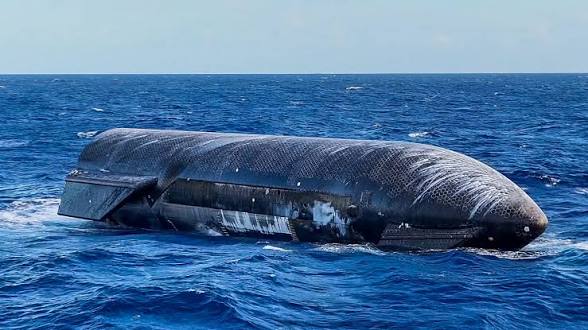
SpaceX has reached another milestone in its ambitious Starship development program by dispatching a recovery vessel to retrieve a Starship spacecraft that remains floating in the Indian Ocean after its latest test flight. While previous Starship missions often ended with the vehicle breaking apart or sinking shortly after splashdown, this mission has produced something entirely different: a spacecraft that survived re-entry and ocean landing well enough to remain afloat, offering engineers an unprecedented opportunity to study real flight hardware after one of the most demanding phases of space travel.
According to SpaceX, recovery teams have been continuously monitoring and photographing the spacecraft since it splashed down. Images released by the company show the massive stainless-steel vehicle still floating despite enduring the extreme temperatures and forces generated during atmospheric re-entry. Elon Musk also confirmed that a ship has been sent to recover the spacecraft, signalling that SpaceX believes the vehicle is valuable enough to justify a full retrieval operation rather than allowing it to sink.
The recovery effort represents far more than simply towing a damaged spacecraft back to shore. If engineers can successfully retrieve the vehicle, they will gain access to invaluable physical evidence that cannot be obtained through telemetry alone. Every heat shield tile, weld, structural panel, fuel tank and onboard system will reveal how Starship performed under actual flight conditions. Such inspections can uncover tiny cracks, areas of unexpected wear, thermal damage and structural stresses that computer models or sensor data may not fully capture. These findings will directly influence the design of future Starship vehicles and accelerate improvements to the programme.
Starship is the largest and most powerful rocket system ever developed, standing roughly 123 metres tall when stacked with its Super Heavy booster. It is central to SpaceX’s long-term vision of making humanity a multi-planetary species. The rocket is designed to transport satellites, cargo and eventually large numbers of people to destinations ranging from low-Earth orbit to the Moon and, ultimately, Mars. NASA also plans to use a specialised version of Starship as the lunar lander for future Artemis missions that aim to return astronauts to the Moon.
Unlike traditional rockets that are discarded after launch, SpaceX is pursuing complete reusability. The company has already transformed the economics of spaceflight by routinely recovering and reusing Falcon 9 boosters. Starship is intended to extend that philosophy to an entirely new level, with both the Super Heavy booster and the upper-stage spacecraft eventually becoming rapidly reusable. Achieving that goal would dramatically reduce launch costs while allowing missions to be flown more frequently than ever before.
Although the latest Starship test flight did not accomplish every planned objective, the spacecraft’s survival is being viewed as a significant engineering success. Spaceflight development rarely progresses in a straight line, and SpaceX has long embraced an iterative testing strategy in which every mission generates data used to improve the next vehicle. The company frequently states that each flight—whether fully successful or not—provides lessons that move the programme closer to operational readiness. Recovering the spacecraft adds an entirely new source of information to that process.
Engineers are expected to pay particular attention to Starship’s thermal protection system. During re-entry, the spacecraft experiences temperatures reaching thousands of degrees as it slows from orbital velocities. Thousands of ceramic heat-shield tiles protect the vehicle from this intense heat. Inspecting those tiles after an actual flight could reveal which areas performed perfectly, which experienced excessive heating and where future improvements may be required. Even minor changes based on these observations could substantially improve reliability during future missions.
Structural integrity will also be a major focus of the investigation. Starship’s stainless-steel construction is designed to withstand repeated launches and landings while remaining relatively inexpensive to manufacture. By examining how the vehicle responded to launch loads, atmospheric re-entry and ocean impact, engineers can refine manufacturing techniques, strengthen vulnerable areas and reduce unnecessary weight where performance exceeded expectations. These refinements are essential for achieving the rapid turnaround times needed for frequent space missions.
The successful recovery would also validate another important capability: retrieving Starship after a controlled splashdown. Even if future missions transition to catching returning spacecraft using launch tower arms, understanding how Starship behaves in the ocean provides additional operational flexibility. Ocean recovery could remain an important backup option during testing or in situations where a return to the launch site is not possible.
SpaceX’s approach has consistently prioritised rapid testing over lengthy development cycles. Instead of waiting years between flights, the company builds, launches, analyses failures and implements improvements at an unusually fast pace. This philosophy has enabled rapid progress from early Starship prototypes to increasingly capable test vehicles. Recovering an actual flown spacecraft adds another powerful feedback mechanism, allowing engineers to compare sensor data with the physical condition of the vehicle itself.
The mission also highlights how SpaceX continues to push the boundaries of rocket recovery. The company revolutionised the industry by landing Falcon boosters, developed specialised drone ships for offshore recoveries and routinely retrieves Dragon spacecraft after crewed missions. Recovering an enormous Starship from the open ocean would represent another major advancement in reusable spaceflight operations.
If the retrieval is completed successfully, the recovered Starship may become one of the most valuable engineering assets in the company’s history. Rather than relying solely on digital data, engineers will have the opportunity to inspect every major component, compare real-world performance against computer simulations and identify improvements that could make future vehicles safer, stronger and more reusable.
For SpaceX, every recovered spacecraft is another step toward its ultimate objective: making spaceflight as routine as commercial aviation. While the road to fully reusable interplanetary transportation remains challenging, the sight of a Starship floating intact after its mission—and a recovery ship heading out to bring it home—offers tangible evidence that the company is steadily moving closer to turning that vision into reality.