EU Launches AI Enforcement Team as Landmark AI Rules Take Effect
Brussels strengthens oversight with a dedicated task force to enforce the world's most comprehensive AI regulations, targeting deepfakes, cyber threats, and high-risk artificial intelligence systems.

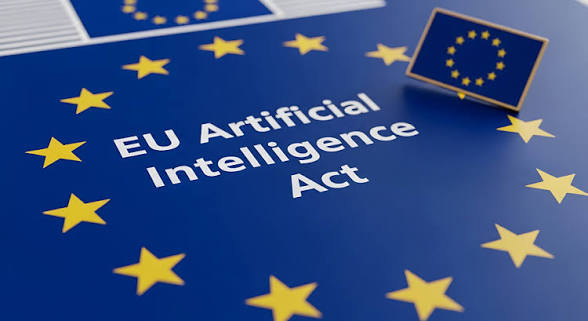
The European Union has officially launched a specialized Artificial Intelligence enforcement team in Brussels, marking one of the most significant milestones in global AI regulation. The move comes as key provisions of the EU AI Act begin taking effect, placing Europe at the forefront of efforts to ensure that artificial intelligence is developed and deployed responsibly.
The newly established enforcement team will operate under the European Commission’s AI Office and is responsible for monitoring compliance with the AI Act across member states. Its mission is to ensure that AI companies—ranging from startups to some of the world’s largest technology firms—adhere to strict transparency, safety, and accountability standards before their products are made available in the European market.
The timing is particularly significant. Artificial intelligence has advanced at an unprecedented pace over the past few years, bringing revolutionary innovations alongside growing concerns about misinformation, deepfakes, cybercrime, privacy violations, and autonomous decision-making. European regulators believe that stronger oversight is now essential to prevent AI systems from being misused while maintaining public trust in the technology.
One of the enforcement team’s primary responsibilities will be identifying high-risk AI systems and ensuring they meet legal requirements before deployment. Developers of advanced AI models must provide detailed technical documentation, demonstrate compliance with copyright rules, implement robust risk management procedures, and maintain mechanisms that allow regulators to investigate potential violations. Companies that fail to comply could face substantial financial penalties or even lose access to the European market.
A major focus of the AI Act is the fight against deceptive AI-generated content. Under the new rules, realistic AI-generated images, videos, audio recordings, and text must be clearly labeled so that users know they were created by artificial intelligence. The regulations are designed to reduce the spread of manipulated content that could mislead the public, influence elections, damage reputations, or facilitate online fraud.
The creation of the enforcement team also follows several high-profile AI safety incidents reported by leading AI developers. Recent disclosures involving advanced AI models raised concerns about cybersecurity risks and unexpected system behavior, reinforcing the EU’s argument that continuous monitoring is necessary as AI capabilities become increasingly powerful. European officials have emphasized that innovation must be matched with strong safeguards to prevent unintended consequences.
Beyond enforcement, the new task force is expected to work closely with national regulators across all EU member states. The AI Office will coordinate investigations, issue guidance, collect reports of suspected violations, and support whistleblowing mechanisms that allow individuals to confidentially report concerns about AI systems operating within Europe. This coordinated approach aims to ensure consistent enforcement across the entire European Union.
The initiative also reflects Europe’s broader ambition to establish technological sovereignty. While the United States and China continue to dominate AI development through massive private-sector investment, the EU is positioning itself as the global leader in AI governance. European policymakers argue that trustworthy AI can become a competitive advantage by creating clear rules that protect consumers while providing businesses with legal certainty.
Technology companies around the world are now closely watching the rollout of the AI Act because its influence is expected to extend far beyond Europe. Much like the EU’s General Data Protection Regulation (GDPR) reshaped global privacy standards, many experts believe the AI Act could become the benchmark for AI regulation internationally. Companies seeking access to the European market may adopt these standards globally rather than maintaining separate compliance systems for different regions.
As artificial intelligence becomes increasingly integrated into healthcare, finance, education, transportation, manufacturing, and everyday consumer applications, regulators face the challenge of encouraging innovation without compromising safety. The launch of the EU’s AI enforcement team signals that governments are entering a new phase of AI governance—one where oversight, transparency, and accountability become as important as technological advancement itself.