Rare Total Solar Eclipse to Cross Spain in Historic Celestial Event
Spain prepares for its first total solar eclipse in more than a century as millions of skywatchers, scientists, and tourists anticipate one of the most spectacular astronomical events of the decade.

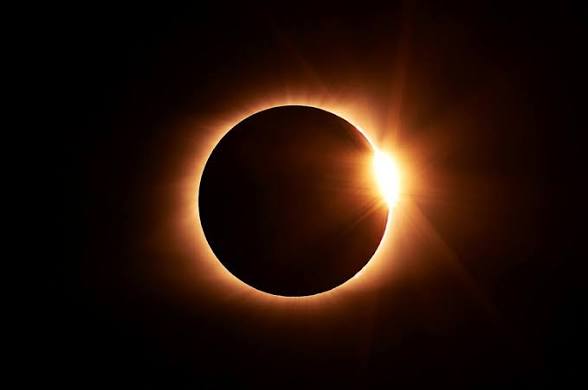
One of the most extraordinary astronomical events of the decade is about to unfold as a total solar eclipse sweeps across parts of Europe, with Spain set to experience its first total solar eclipse visible from the mainland in more than 120 years. Scheduled for August 12, 2026, the eclipse is expected to draw millions of visitors, astronomers, photographers, and eclipse enthusiasts eager to witness the rare phenomenon, which will briefly turn day into night across parts of the country.
A total solar eclipse occurs when the Moon passes directly between the Earth and the Sun, completely blocking the Sun’s visible surface. During the brief period known as totality, daylight fades dramatically, temperatures can drop noticeably, stars and planets may become visible, and the Sun’s outer atmosphere—called the corona—appears as a glowing white halo surrounding the dark silhouette of the Moon. This breathtaking spectacle lasts only a few minutes, making total solar eclipses among the rarest and most sought-after natural events on Earth.
The eclipse will begin over the Arctic before crossing eastern Greenland and western Iceland, eventually reaching the Iberian Peninsula. In Spain, the path of totality will travel from west to east, passing through several major regions and cities before continuing into the Mediterranean. Locations within the path of totality will experience complete darkness for up to 2 minutes and 18 seconds, while much of the rest of Europe and parts of North America and West Africa will witness a partial solar eclipse.
For Spain, the event is historically significant. The last total solar eclipse visible from mainland Spain occurred in 1905, meaning this will be the first opportunity in more than a century for residents and visitors to witness such a phenomenon without leaving the country. The rarity of the event has sparked enormous interest from the international astronomy community, with observatories, universities, and scientific organizations preparing extensive observation campaigns.
Scientists view total solar eclipses as much more than spectacular visual events. They provide rare opportunities to study the Sun’s corona, the outermost layer of the solar atmosphere that is normally hidden by the Sun’s intense brightness. During totality, researchers can investigate the corona’s structure, temperature, and magnetic fields, helping scientists better understand solar activity, solar flares, and the powerful eruptions known as coronal mass ejections. These solar events can influence satellite communications, GPS systems, radio transmissions, and even power grids on Earth.
Several scientific organizations, including the European Space Agency (ESA) and NASA, are expected to conduct observations during the eclipse. Researchers plan to deploy telescopes, specialized cameras, weather balloons, and high-altitude aircraft to collect data on the Sun’s atmosphere and to study how Earth’s atmosphere responds when sunlight is suddenly blocked. These observations could improve our understanding of both solar physics and atmospheric science.
The eclipse is also expected to provide a major boost to Spain’s tourism industry. Hotels, campsites, and viewing locations along the eclipse path have already seen strong demand from travelers hoping to secure the best observation spots. Many municipalities are organizing public viewing events, astronomy festivals, educational activities, and guided observation sessions to accommodate the expected influx of visitors. Tourism officials anticipate that the eclipse will generate significant economic activity while showcasing Spain as a destination for scientific and astronomical tourism.
Adding to the excitement, the eclipse coincides with an especially active period for skywatchers. Around the same time, the annual Perseid meteor shower will be approaching its peak, and several planets will be visible together in the early morning sky. This rare combination of astronomical events makes August 2026 one of the most remarkable months for observational astronomy in recent years.
Experts are reminding the public that observing the eclipse safely is essential. Looking directly at the Sun during the partial phases without proper eye protection can cause permanent eye damage. Only ISO-certified eclipse glasses or specially designed solar filters should be used. The only time it is safe to look at the eclipse without protection is during the brief period of complete totality, when the Moon entirely covers the Sun. Once even a small portion of the Sun reappears, protective eyewear must be used again.
This eclipse also marks the beginning of an exceptional series of eclipses visible from Spain. Another major total solar eclipse is expected on August 2, 2027, followed by an annular, or “ring of fire,” eclipse in 2028. Together, these events will make the Iberian Peninsula one of the world’s premier destinations for eclipse observation over the next few years.
For astronomers, photographers, researchers, and casual skywatchers alike, the 2026 total solar eclipse represents far more than a fleeting celestial spectacle. It is a rare opportunity to witness one of nature’s most awe-inspiring events, contribute to scientific discovery, and experience a moment that many people wait a lifetime to see. As the Moon’s shadow races across Spain, millions will look skyward to witness a phenomenon that has captivated humanity for centuries and continues to inspire wonder in the world.