Porsche Reportedly Plans to End Flagship Taycan Production by 2030
Weakening electric-vehicle demand has reportedly pushed Porsche toward phasing out its flagship electric sedan, marking a major shift in the company’s EV strategy.

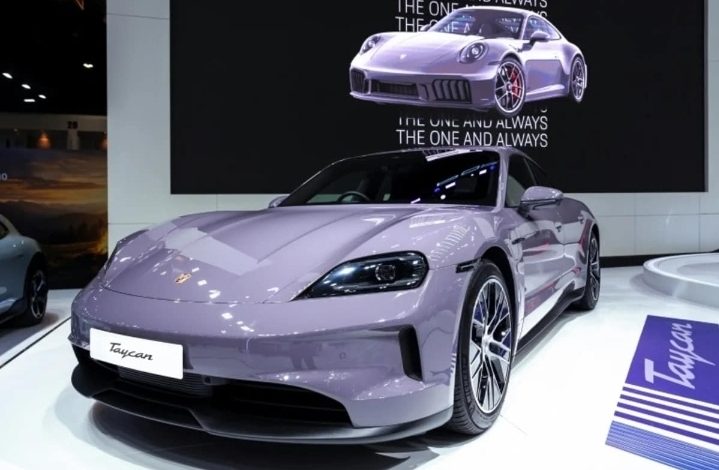
Porsche is reportedly planning to end production of the Taycan, its flagship fully electric sports sedan, by 2030. German business publication WirtschaftsWoche reported that Porsche management and its works council have agreed in principle to phase out the model. Porsche has not formally confirmed the reported decision.
The reported decision comes after a significant decline in Taycan sales. The model sold nearly 41,000 units in 2023, but sales fell to roughly 16,000 in 2025. During the first half of 2026, only around 6,000 Taycans were reportedly sold, highlighting the challenges Porsche has faced in the premium EV market.
Porsche had previously considered moving Taycan production from its Stuttgart-Zuffenhausen factory to Leipzig, but that plan has reportedly been abandoned. Instead, production is expected to continue in Stuttgart while the company gradually winds down the model. The reported change reflects Porsche’s broader reassessment of its electric-vehicle strategy as demand has developed more slowly than expected.
The company has increasingly shifted its focus toward a combination of combustion-engine, hybrid and electric vehicles rather than relying as heavily on a rapid transition to fully electric models. At the same time, Porsche continues investing in electric vehicles, including the electric Macan and the upcoming electric Cayenne, showing that the reported Taycan phase-out does not mean Porsche is abandoning EVs altogether.
If the report is confirmed, the Taycan’s eventual retirement would represent a significant moment for Porsche. Launched in 2019 as a showcase for the company’s electric technology, the Taycan helped establish Porsche as a serious competitor in the high-performance EV market. Its declining sales now demonstrate how quickly market conditions can change—and how luxury automakers are being forced to balance ambitious electrification plans with actual consumer demand.