Bill Gates Calls for “Human Reserved” Jobs as AI Advances
The Microsoft co-founder is urging governments to protect certain occupations from automation and consider taxes on AI and robots as artificial intelligence reshapes the labor market.

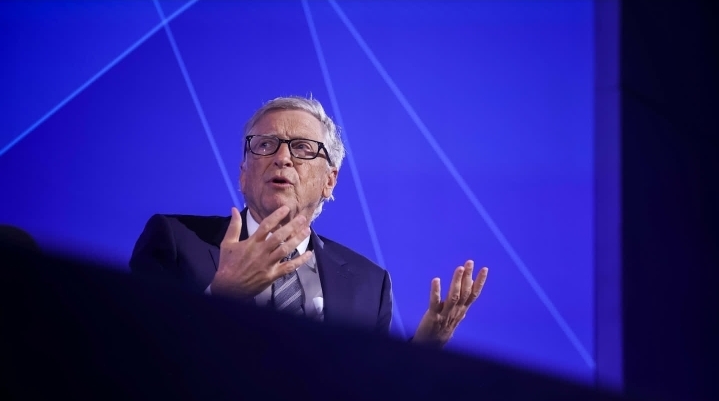
Bill Gates has issued one of his strongest warnings yet about the potential social impact of artificial intelligence. In a new essay, he argues that AI is advancing rapidly enough that governments need to prepare now for major changes to employment, education and society. Gates says AI could create enormous benefits, particularly in healthcare and science, but believes those benefits will not automatically outweigh the disruption.
One of his most notable proposals is a concept he calls “Human Reserved.” Gates suggests that society could deliberately preserve certain jobs for people even when AI or robots become technically capable of performing them. He compares the idea to a nature reserve: an area that could be developed but is intentionally protected because losing it would have consequences beyond simple economic efficiency.
Gates believes some roles could remain human-centered because they depend heavily on empathy, trust or social interaction. He points to caregiving and jury service as examples, while suggesting that healthcare and education could contain a mixture of AI-supported and human-reserved responsibilities. He has also discussed preserving jobs for workers who would face particular difficulty transitioning into entirely different careers.
Gates is also proposing changes to the tax system. He argues that companies currently face payroll taxes when employing people, while purchasing machines can receive different tax treatment. A tax on AI use or robots, he says, could slow the economic incentive to replace human workers too quickly while generating money for retraining programs and social safety nets.
The proposal comes amid growing debate about whether AI will primarily eliminate jobs or transform them. Gates expects significant disruption across areas such as customer service, software development and legal work, while acknowledging that AI could also create substantial economic benefits. His broader message is that governments should not wait until large-scale displacement occurs before developing policies for the transition.
Gates’ ideas are still proposals rather than established policy, and they raise difficult questions about who would decide which occupations qualify as “Human Reserved” and how such rules could work across different countries. Nevertheless, his intervention adds significant weight to the debate over how much of the future workforce should remain deliberately human, even as AI becomes capable of performing more tasks.