CERN Experiment Finds Persistent Anomaly in Rare Particle Decays
New LHCb results continue to show a discrepancy between rare B-meson decays and predictions from the Standard Model, keeping the possibility of undiscovered physics alive.

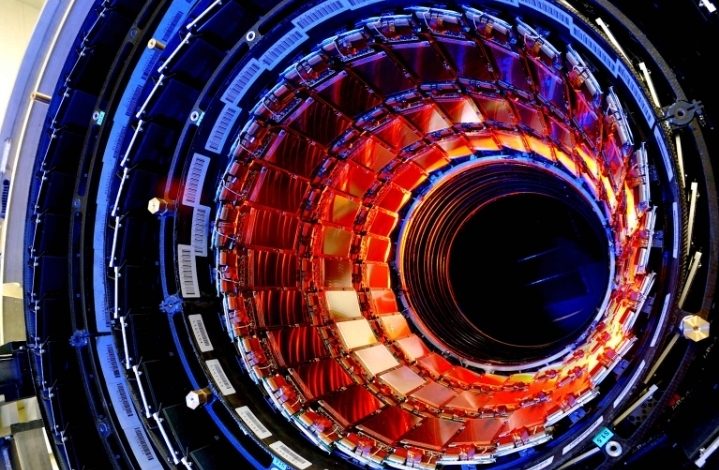
Scientists working with CERN’s LHCb experiment have reported that a long-standing discrepancy in the behavior of certain B mesons has persisted in a much larger analysis. The study examined the extremely rare decay of a neutral B meson into a K* meson and a pair of muons, using data corresponding to roughly 650 billion B-meson decays.
The importance of the result comes from the fact that these rare decays are predicted with considerable precision by the Standard Model of particle physics. Yet the latest measurements continue to show differences from those predictions. The discrepancy has appeared in earlier studies as well, meaning scientists are now particularly interested in determining whether the effect is a genuine physical phenomenon or the result of theoretical or experimental uncertainties.
One possible explanation is that an undiscovered particle or fundamental interaction could be influencing the decay. Such a discovery would be extremely significant because the Standard Model, despite its extraordinary success, does not fully explain phenomena such as dark matter, dark energy and the matter-antimatter imbalance. However, the current result does not establish that new physics has been discovered.
The latest analysis is also notable for its scale and precision. Researchers analyzed thousands of usable signal events extracted from the enormous LHC dataset. The particular decay occurs only around once in a million B-meson decays, making the measurement exceptionally challenging. The analysis was published in Physical Review Letters and represents one of the most comprehensive examinations of this decay channel so far.
For now, physicists remain cautious. The discrepancy has not reached the five-sigma threshold normally associated with a particle-physics discovery, and additional data from future LHC runs will be crucial. If the difference becomes stronger with more observations and improved theoretical calculations, it could provide compelling evidence that the Standard Model is incomplete and point researchers toward an entirely new layer of fundamental physics.