China Demands U.S. Prove AI Theft Claims
Beijing has pushed back against Washington’s accusations that Chinese AI companies copied American models, demanding evidence and warning against sanctions based on unproven claims.

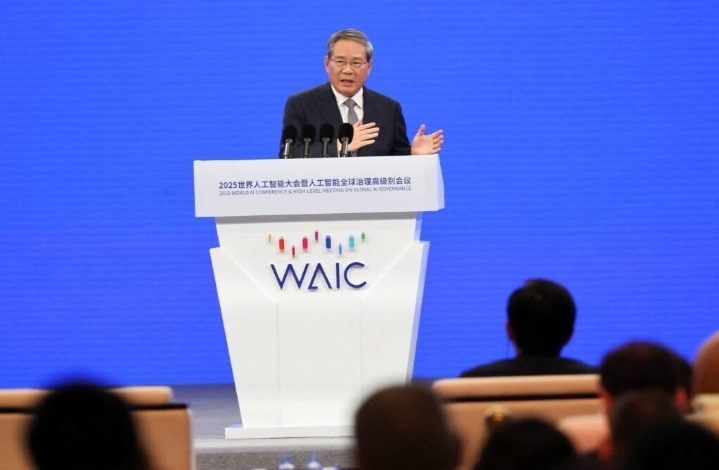
China has strongly rejected U.S. allegations that some Chinese artificial intelligence companies used American AI models to accelerate their own technological development. Beijing argues that Washington has not provided sufficient factual or legal evidence to support accusations of large-scale intellectual property theft through a technique known as model distillation.
The dispute centers on claims from U.S. officials that Chinese AI companies may have extracted knowledge or capabilities from advanced American models. Model distillation is a legitimate technique in some contexts, where a smaller AI system learns from a larger one, but U.S. officials argue that large-scale extraction of model outputs could cross into intellectual property theft. China has challenged Washington to clearly demonstrate where that line was crossed.
Beijing has described the American approach as “AI hegemonism,” accusing the United States of using technology restrictions and potential sanctions to limit China’s technological progress. Chinese officials have also argued that innovation in AI is becoming increasingly international and that restricting companies without clear evidence could further divide the global technology industry.
The controversy is part of a much larger battle for leadership in artificial intelligence. The United States has been expanding restrictions on China’s access to advanced AI chips and related technologies, while also encouraging allied countries to align with Washington’s AI ecosystem. China, meanwhile, has promoted its own international AI cooperation initiatives and opposed efforts to force countries to choose between competing technological blocs.
The dispute shows how AI has become a major geopolitical battleground between the world’s two largest economies. What began as competition over models and semiconductors is increasingly expanding into trade policy, intellectual property, national security and international alliances. With Chinese AI companies becoming more competitive, the pressure on both Washington and Beijing to prove their claims—and defend their technological strategies—is likely to intensify.