China’s CXMT Begins Mass Production of LPDDR6 Memory Chips
The Chinese memory-chip maker has entered mass production of next-generation LPDDR6 DRAM and will supply the technology for Xiaomi’s upcoming flagship foldable smartphone.

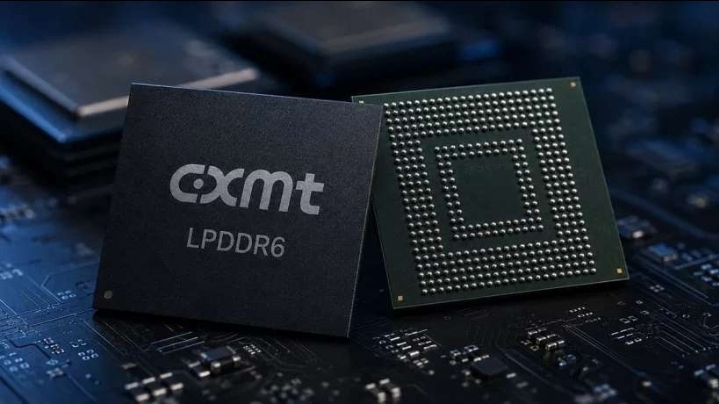
China’s leading memory-chip manufacturer, ChangXin Memory Technologies (CXMT), has announced that it has begun mass production of its next-generation LPDDR6 memory chips. The development represents a major step for China’s semiconductor industry as domestic companies attempt to reduce the technological gap with global memory leaders such as Samsung, SK hynix and Micron.
CXMT is expected to supply its LPDDR6 chips for Xiaomi’s upcoming Xiaomi 18 Fold, scheduled for release in September 2026. Xiaomi has confirmed that the foldable smartphone will combine CXMT’s new memory technology with its in-house 3-nanometre Xring O3 processor, creating one of the first major flagship devices to use the new generation of mobile memory.
The achievement is particularly significant because CXMT only entered volume production of its previous-generation LPDDR5 memory technology relatively recently. Moving into LPDDR6 production so quickly suggests that the company is accelerating its efforts to compete in the high-performance memory market, where South Korean and American manufacturers have traditionally held dominant positions.
LPDDR6 memory is designed to provide faster data-transfer speeds and improved efficiency for smartphones and other advanced computing devices. These improvements are becoming increasingly important as mobile devices handle more demanding AI features, high-resolution imaging and complex multitasking. CXMT has also indicated that samples of its LPDDR6 chips could be used in smartphones, servers and smart vehicles, potentially expanding the technology beyond mobile devices.
The announcement comes at a time when CXMT is experiencing rapid financial and technological growth. The company recently reported a major increase in revenue and a return to profitability, benefiting from strong global demand for memory chips driven by artificial intelligence and expanding data-center infrastructure. Its move into LPDDR6 production could further strengthen China’s position in the increasingly competitive global semiconductor industry.