Scientists Release Largest-Ever 2D Map of the Universe
A new 5.6-trillion-pixel map catalogs nearly four billion celestial objects, giving astronomers and the public an unprecedented view of roughly 75% of the sky.

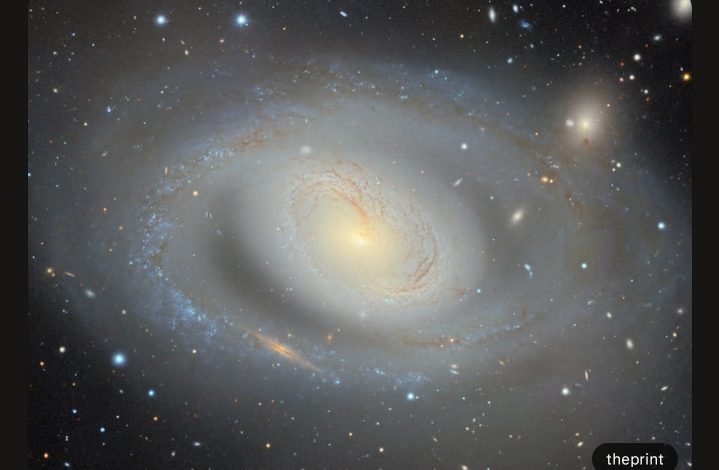
Scientists have released what is being described as the largest-ever 2D color map of the universe, created by the DESI Legacy Imaging Surveys team after 13 years of observations and data processing. The enormous map contains nearly four billion celestial objects, including stars, galaxies, asteroids and other distant objects. The data is publicly available, allowing researchers and citizen scientists to explore an exceptionally detailed view of the cosmos.
The map contains approximately 5.6 trillion pixels and covers about 75% of the sky in visible and near-infrared light. Researchers constructed it by combining more than 263,000 telescope exposures collected through several major astronomical surveys. The result is effectively a massive digital photograph of the universe, showing where objects are located and how bright they appear.
Beyond its size, the dataset could become an important research tool for studying some of astronomy’s biggest questions. Scientists can use the map to search for rare phenomena such as gravitational lenses and supernovae while investigating the mysterious nature of dark matter and dark energy. The map also serves as a foundation for DESI, which uses these observations to select targets and measure their distances, helping researchers construct detailed three-dimensional maps of the universe.
Creating the map required enormous amounts of computing power. Hundreds of thousands of individual images had to be processed and combined despite differences in atmospheric conditions and telescope observations. The project used the Perlmutter supercomputer at Berkeley Lab, with the complete image-processing operation taking weeks after approximately a year of software development. More than 160 scientists contributed to the data collection effort.
The release is expected to remain a valuable astronomical reference for years, particularly as new observatories produce even more observations of the universe. Researchers will be able to compare future discoveries against this enormous baseline, while AI systems may also use the dataset to help analyze the growing volume of astronomical information. The project demonstrates how modern telescopes, supercomputers and international scientific collaboration are transforming humanity’s ability to map and understand the universe.