Thinking Machines Launches Inkling, an Open AI Model Designed to Challenge Industry Giants
Former OpenAI CTO Mira Murati's startup unveils its first open-weight AI model, focusing on efficiency, flexibility, and enterprise customization instead of chasing benchmark dominance.

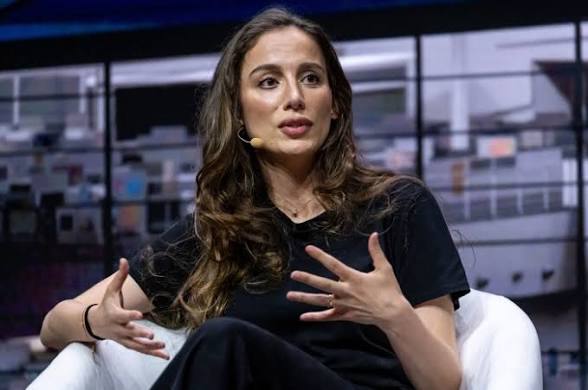
Artificial intelligence startup Thinking Machines, founded by former OpenAI Chief Technology Officer Mira Murati, has officially introduced Inkling, the company’s first in-house AI model. Rather than competing solely on raw benchmark scores, Inkling is designed around a different philosophy: giving developers and businesses a powerful, customizable model that balances intelligence, efficiency, and cost. The launch marks the company’s first major product release and positions it as a serious new competitor in the rapidly evolving AI industry.
Unlike proprietary AI systems that operate behind closed platforms, Inkling is an open-weight model, allowing developers to download, run, fine-tune, and customize it for their own applications. While the model’s trained weights are publicly available, the underlying training data and complete development process remain private. This approach provides organizations with far greater control over deployment, privacy, and optimization than traditional closed AI services.
Inkling is built using a Mixture-of-Experts (MoE) architecture containing 975 billion total parameters, although only about 41 billion parameters are activated for each token, making inference significantly more efficient than running the entire model simultaneously. It also supports an impressive one-million-token context window, enabling it to process extremely large documents, lengthy conversations, software repositories, and complex research materials in a single session. The model was trained on approximately 45 trillion tokens spanning text, images, audio, and video, making it a truly multimodal AI system.
One of Inkling’s most distinctive features is its controllable reasoning capability. Instead of forcing users to pay for maximum reasoning power on every request, developers can adjust how deeply the model “thinks” depending on the task. Simple queries can be answered quickly and inexpensively, while more difficult problems can use additional reasoning when needed. This flexibility could substantially reduce AI operating costs for businesses deploying models at scale.
Thinking Machines says the goal is not to create the single smartest AI model in the world, but rather one that enterprises can adapt to their specific needs. Many organizations prioritize reliability, customization, security, and predictable costs over marginal improvements in benchmark performance. By releasing Inkling under the Apache 2.0 open-source license, the company hopes to encourage widespread adoption among researchers, developers, and enterprise customers seeking greater control over their AI infrastructure.
The launch also highlights the growing competition in the AI ecosystem. While companies such as OpenAI, Anthropic, Google, and Meta continue investing heavily in proprietary frontier models, Thinking Machines is betting that the future will include strong demand for open, customizable alternatives. The company believes businesses increasingly want AI systems they can own, modify, and integrate into their own products without depending entirely on external providers.
Industry analysts view Inkling as an important milestone for the startup, demonstrating that new entrants can still compete in an AI market dominated by trillion-dollar technology companies. Although the model does not claim to outperform every leading competitor, its combination of scale, efficiency, multimodal capabilities, and open accessibility could make it an attractive option for enterprises looking to build AI-powered applications while maintaining flexibility and controlling infrastructure costs.
As artificial intelligence continues to reshape industries ranging from healthcare and finance to education and software development, the introduction of Inkling adds another significant player to the race. Whether Thinking Machines can establish itself alongside the world’s largest AI laboratories remains to be seen, but its debut signals that innovation in AI is increasingly being driven not only by raw model performance but also by openness, efficiency, and practical usability.