World Cup 2026: Colombia 1–0 Ghana — When one goal exposed thin line between competing, advancing

By Paul Lucky Okoku
Ghana did not lose because they lacked courage. They lost because knockout football rewards precision more than bravery.
There are matches where the scoreline tells you what happened.
Then there are matches where the scoreline hides the deeper lesson.
Colombia 1, Ghana 0 belongs to the second category.
On paper, it was a narrow defeat.
On the field, it was a lesson in modern knockout football.
One early goal.
One disciplined defensive structure.
One African team chasing the game without ever fully breaking the opponent’s resistance.
That was the story.
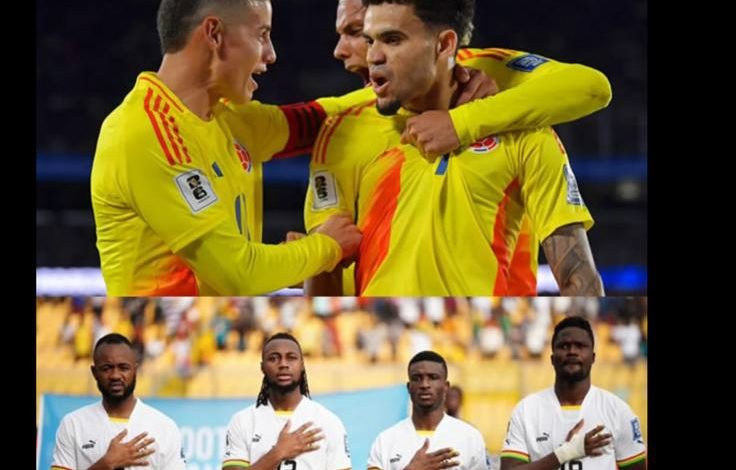
Colombia defeated Ghana 1–0 in Kansas City to advance to the Round of 16 of the 2026 FIFA World Cup, with Jhon Arias scoring the decisive goal in the 14th minute after a sharp cross from Luis Suárez, who had entered early following an injury to Jhon Córdoba.
For Ghana, the defeat was painful but instructive.
The Black Stars fought.
They stayed in the contest.
They were not embarrassed.
But at this level, dignity alone does not advance a team.
Execution does.
This was not a match of humiliation.
It was a match of margins.
Colombia were not spectacular, but they were organized, controlled, and mature. Ghana were committed, but they lacked the attacking clarity needed to disturb Colombia consistently. Reports from the match noted that Colombia controlled large parts of the game, while Ghana struggled to create clear chances and failed to register meaningful attacking pressure.
That is the lesson.
African football has narrowed the physical gap.
It has narrowed the courage gap.
It has narrowed the confidence gap.
The next frontier is the final-third decision-making gap.
Ghana’s 1–0 defeat to Colombia revealed one of African football’s most important modern challenges: the continent no longer struggles to compete, but it must now learn how to convert competitive performances into knockout victories.
At the highest level, effort keeps you in the match. Execution takes you into the next round.
Football does not always reward the team that suffers well.
It rewards the team that solves problems under pressure.
When the First Goal Changed the Match
The match turned early.
In the 14th minute, Jhon Arias finished the moment that decided the night. Luis Suárez, introduced unexpectedly after Córdoba’s injury, delivered the cross that allowed Arias to score.
That goal did more than put Colombia ahead.
It changed the psychology of the game.
Colombia could now manage space.
Ghana had to chase.
Colombia could protect the middle.
Ghana had to take more risks.
Colombia could play with patience.
Ghana had to play with urgency.
That is why early goals in knockout football carry such enormous power. They do not only affect the scoreboard. They affect the emotional structure of the match.
Colombia Did Not Need to Be Brilliant
Colombia were not flawless.
They missed chances.
Luis Díaz had a goal disallowed for offside, and Ghana goalkeeper Lawrence Ati Zigi made important saves to keep Ghana alive.
But Colombia did what mature tournament teams do.
They scored.
They managed the game.
They defended collectively.
They prevented Ghana from finding rhythm.
They did not panic when the second goal failed to come.
That is championship behavior.
Not every knockout win is beautiful.
Some are professional.
This was professional.
*Ghana’s Courage Was Real, But Courage Was Not Enough*
Ghana did not collapse.
That must be said clearly.
They kept fighting.
They stayed organized enough to avoid being overwhelmed.
Ati Zigi’s saves gave Ghana a chance to remain in the match.
But the problem was not effort.
The problem was penetration.
Ghana struggled to turn possession into danger. They struggled to force Colombia’s goalkeeper into repeated uncomfortable moments. Several match reports noted Ghana’s limited attacking threat and Colombia’s superiority in controlling the contest.
That is where the analysis must go deeper.
At the World Cup, defending well may keep you respectable.
But attacking with clarity gives you a chance to survive.
The Missing Ghanaian Ingredient: Final-Third Conviction
Ghana needed more than possession.
They needed conviction.
They needed runners beyond the ball.
They needed sharper combination play around Colombia’s box.
They needed earlier crosses with bodies attacking the penalty area.
They needed midfielders willing to arrive late and shoot.
They needed the courage not only to compete, but to hurt Colombia.
This is one of the major lessons for African football.
Too many African teams are now good enough to stay in matches.
The next step is becoming ruthless enough to win them.
The Match Within the Match: Colombia’s Control of Space
Colombia’s greatest strength was not just the goal.
It was the way they controlled Ghana’s access to dangerous areas.
Whenever Ghana tried to build, Colombia compressed the space.
Whenever Ghana tried to break, Colombia recovered quickly.
Whenever Ghana attempted to stretch the field, Colombia protected central zones.
This is what tactical maturity looks like.
It is not always dramatic.
It is positional.
It is collective.
It is disciplined.
It forces the opponent to play around the danger instead of through it.
Ghana had energy.
Colombia had control.
At this level, control usually wins.
The African Matchday Context
This Ghana defeat came on a remarkable day for African football.
Egypt advanced after defeating Australia on penalties.
Cape Verde pushed defending champions Argentina to the limit before losing 3–2.
Ghana fell narrowly to Colombia.
Three African teams.
Three different outcomes.
One shared message.
Africa is no longer merely participating.
Africa is competing.
But the continent must still turn brave performances into consistent knockout progression.
That is the difference between being respected and being feared.
The Balanced View: Colombia Deserved It
Some Ghanaian supporters may argue that the match was close because the score was only 1–0.
That is understandable.
But narrow does not always mean equal.
Colombia were the better team.
They created the decisive moment.
They managed the match better.
They forced Ghana into uncomfortable areas.
They advanced deservedly.
Respecting Ghana does not require denying Colombia’s superiority.
Football analysis must be honest.
Colombia earned the victory.
Ghana earned reflection.
The Vanguard Reflection: What This Means for African Football
For those of us who played for African nations decades ago, there is pride in watching today’s African teams compete with greater tactical awareness, greater physical preparation, and greater global confidence.
But pride must not prevent honesty.
The African football story is no longer about whether we belong.
We belong.
The question now is whether we can consistently finish the job.
Can we score when the chance arrives?
Can we stay calm after conceding early?
Can we create solutions against organized defenses?
Can we move from resistance to authority?
Can we stop celebrating only brave exits and start demanding mature advancement?
That is the next frontier.
The Growth Lesson: From Survival Football to Solution Football
Ghana’s defeat should not be treated as failure alone.
It should be treated as education.
There is a difference between survival football and solution football.
Survival football asks:
“How do we stay in the game?”
Solution football asks:
“How do we win the game?”
Ghana stayed in the game.
Colombia solved the game.
That is why Colombia advanced.
A Practical Football Blueprint for Ghana
Ghana’s next evolution must focus on five areas.
First, final-third creativity must improve. Ghana need more players who can receive under pressure, turn quickly, and break compact defensive lines.
Second, chance creation must become more deliberate. Attacks cannot depend only on energy, pace, or transition moments.
Third, midfield support must be more aggressive. When strikers are isolated, the opponent’s defenders become comfortable.
Fourth, wide play must produce better end product. Crosses, cutbacks, and second balls must become planned weapons.
Fifth, tournament psychology must mature. Conceding early cannot lead to rushing, frustration, or predictable attacks.
These are not impossible problems.
They are development problems.
And development requires honesty.
Solutions: What African Football Must Keep Building
African football must continue investing in coaching education, academy structure, tactical literacy, data analysis, sports science, and artificial intelligence.
AI is now part of modern football preparation.
It can help teams study opponent tendencies.
It can identify attacking patterns.
It can support injury prevention.
It can improve player scouting.
It can help coaches make better tactical decisions before and during matches.
The nations that combine natural talent with modern intelligence systems will move faster.
Africa has the talent.
Now it must deepen the structure around the talent.
Call to Action: Ghana Must Not Waste This Lesson
Ghana should not leave this World Cup only with disappointment.
They should leave with clarity.
The Black Stars showed enough to confirm they belong on the world stage.
But belonging is no longer enough.
The standard must rise.
The next Ghana team must not only defend with pride.
It must attack with purpose.
It must not only compete with elite teams.
It must punish them.
That is how respect becomes advancement.
That is how courage becomes consequence.
That is how potential becomes history.
Conclusion: The Score Was 1–0, But the Lesson Was Bigger
Colombia deserved to advance.
Ghana deserved respect.
But football gave Ghana a hard truth.
At the World Cup, the smallest moment can become the largest difference.
One cross.
One finish.
One defensive structure.
One team advancing.
One team going home.
Ghana did not lose because they lacked heart.
They lost because Colombia found the answer Ghana could not find.
And that is the lesson African football must carry forward:
The next stage of African progress will not be measured only by bravery. It will be measured by execution.
Colombia move on. Ghana bow out. African football learns again that the road from respect to victory is paved with precision.
Paul Lucky Okoku, FIFA Legend , CAF Silver Medalist, Former Nigerian Super Eagles & Flying Eagles International, Former Olympic Qualifying Team Member, Football Analyst and Founder, GTCF writes from Atlanta, USA