China Completes Main Complex of Major Fusion Energy Project
China has completed the main complex of its Burning Plasma Experimental Superconducting Tokamak, marking a major milestone in its effort to develop controlled nuclear fusion as a future source of clean energy.

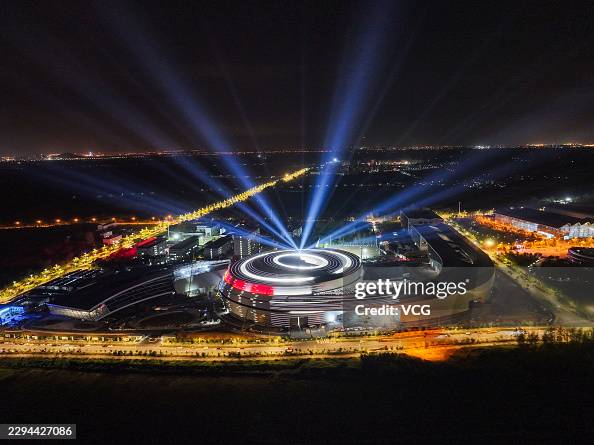
China has reached a significant milestone in its nuclear-fusion programme with the completion of the main complex for the Burning Plasma Experimental Superconducting Tokamak, known as BEST, in Hefei, Anhui Province. The facility is designed to reproduce the extreme conditions required for controlled nuclear fusion, the same fundamental process that powers the Sun. The project is one of China’s major efforts to develop fusion technology capable of eventually producing large amounts of low-carbon energy.
The completion of the main complex comes as engineers continue installing and assembling the facility’s critical components. Several major components have arrived at the site in recent months, with more than half of the overall work reportedly completed. BEST is designed around a superconducting tokamak, a doughnut-shaped fusion device that uses extremely powerful magnetic fields to confine superheated plasma rather than allowing it to come into contact with the reactor walls.
China has also made progress on the enormous superconducting magnets needed for the project. In June, Chinese researchers completed a 582-tonne toroidal-field superconducting magnet, described by the Chinese Academy of Sciences as the world’s largest of its kind for a fusion reactor. The magnet is about 1.3 times the volume of the comparable toroidal-field magnet used in ITER and can store roughly three times as much magnetic energy. These magnets are crucial because they create the powerful magnetic fields required to control fusion plasma.
The ultimate objective of BEST goes beyond simply producing plasma. Unlike earlier experimental devices that primarily investigate plasma behaviour, BEST is intended to study burning deuterium-tritium plasma and move closer to demonstrating the conditions needed for practical fusion power. Fusion could potentially provide a large source of energy without the carbon emissions associated with fossil fuels, although turning experimental fusion into a commercially viable power source remains an extremely difficult engineering challenge.
China’s progress adds another major development to the international race to make fusion energy practical. Projects such as BEST and the multinational ITER programme are attempting to solve some of the same fundamental problems, including plasma confinement, extreme temperatures, superconducting magnets and sustained fusion reactions. The completion of BEST’s main complex therefore represents an important construction milestone, but it does not mean China has already achieved commercial fusion electricity.