Google’s Willow Quantum Chip Cuts Errors 40-Fold in Major Breakthrough
Google Quantum AI has demonstrated a technique that reduces errors in a crucial quantum computing process by approximately 40 times, marking an important step towards building more reliable and powerful quantum computers.

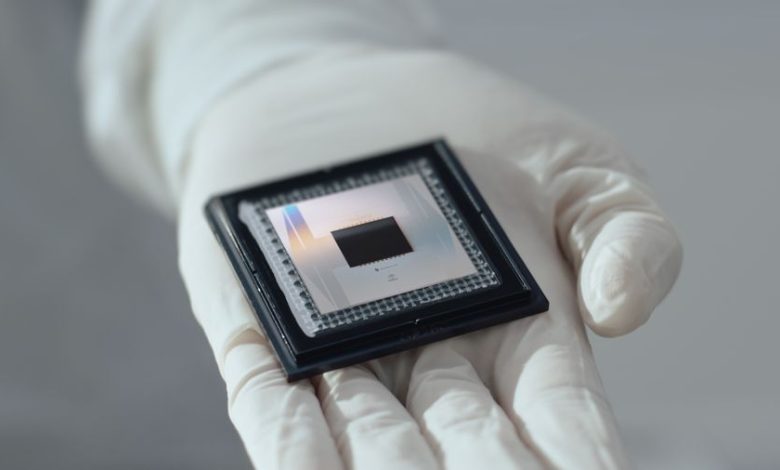
Google has announced a significant advancement in quantum computing after researchers demonstrated a new technique that substantially reduces errors on its Willow quantum processor. The breakthrough, announced on October 15, 2026, centres on a method known as magic state cultivation, which addresses one of the major obstacles preventing quantum computers from performing complex calculations reliably. The research was published in the scientific journal Science and demonstrates that the technique can work on real quantum hardware rather than existing only in theoretical proposals or computer simulations. Google says the approach reduced errors by approximately 40 times compared with unrefined quantum states, potentially improving the efficiency of future quantum computing systems. Although the result does not yet establish that commercially useful, large-scale quantum computers are ready, it provides experimental evidence that a longstanding technical challenge can be addressed.
The breakthrough focuses on magic states, specialised quantum states required to perform certain operations in universal quantum computing. Quantum computers use qubits, which can represent information in ways that differ from conventional computer bits. However, qubits are extremely sensitive to environmental disturbances, making it difficult to maintain accurate calculations as computations become more complex. Producing sufficiently reliable magic states has been particularly challenging because the process requires substantial computing resources and repeated error checks. Google notes that some estimates suggest magic-state production could consume as much as 95 per cent of a quantum computer’s available capacity. Reducing that overhead could allow future machines to devote more resources to solving useful problems instead of continuously preparing and correcting quantum information.
Google’s magic state cultivation technique works by preparing a quantum state within a small region of the processor and carrying out coordinated measurements to identify potential errors. Attempts that fail the checks are discarded, while successful states can be developed into more useful forms for quantum calculations. Using its Willow processor, the research team demonstrated that the technique could produce so-called T-states with a reported logical fidelity of 99.99 per cent. Fidelity measures how closely a quantum state matches its intended state, making it an important indicator of reliability. The team also demonstrated a method for transferring cultivated states between two different quantum error-correction approaches, known as colour codes and surface codes. This matters because practical quantum computers will need to combine different techniques while maintaining the integrity of information across the system.
The achievement builds on theoretical work developed by Google researchers in 2024. Turning the proposal into a successful hardware demonstration required improvements in quantum control, measurement and error detection. Nevertheless, significant limitations remain. Reports on the experiment indicate that the process was resource-intensive, with only a minority of preparation attempts surviving all the required checks. The researchers must now demonstrate that the technique can operate efficiently at a larger scale and across more demanding workloads. Google has not announced a definitive timeline for when the advance will lead to a commercially useful, fault-tolerant quantum computer. The company describes the result as a major step towards that objective, rather than evidence that the broader engineering challenge has been solved.
The development could eventually have implications for scientific research, advanced materials, chemistry and other fields involving calculations that are difficult for conventional computers. More reliable quantum processors could help researchers model complex molecular interactions, investigate new materials and explore specialised optimisation problems. Google’s progress also strengthens competition among technology companies working to build practical quantum systems. However, the latest findings should not be interpreted as meaning that quantum computers can now break modern encryption or compromise cryptocurrency wallets. Those tasks would require much larger, more capable systems and substantial additional advances in error correction and computation. The new technique improves one important component of the technology, but it does not remove the remaining obstacles to large-scale quantum computing.
Google’s Willow breakthrough demonstrates how progress in quantum computing increasingly depends on improving reliability and resource efficiency, rather than simply increasing the number of qubits. By showing that magic state cultivation can reduce errors on actual hardware, the company has moved an important theoretical technique closer to practical implementation. The next stage will involve improving the success rate, scaling the process and integrating it into larger quantum computing architectures. Researchers across the industry will be watching to see whether similar approaches can reduce the cost of error correction enough to make sustained quantum calculations possible. For now, Google’s results represent a promising scientific milestone, while the development of useful, large-scale quantum computers remains an ongoing engineering challenge.