Unbelievable! Mothers are heads of the family in these communities
The existence of matrilineal and matriarchal societies does not diminish the importance of fathers

Every year, Father’s Day offers an opportunity to honour the men who nurture, guide, and provide for their families.
Across much of the world, fathers are often regarded as the heads of households, carrying the responsibility of leadership, decision-making, and family welfare.
Yet, beyond this familiar family structure lies a fascinating reality. In several societies around the world, women occupy a central position in family life. They inherit property, pass on family names, make key household decisions, and serve as the custodians of culture and lineage.
In these communities, fathers remain respected and valued, but family authority is often rooted in women.
As the world marks Father’s Day 2026, these unique societies provide an opportunity to reflect on the diverse ways families are organised and the evolving definitions of leadership, parenthood, and responsibility.
The Minangkabau of Indonesia
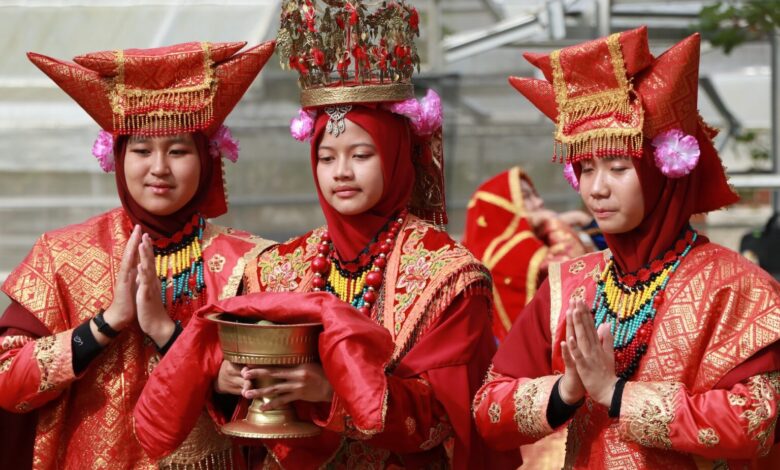
Widely regarded as the world’s largest matrilineal society, the Minangkabau people of West Sumatra, Indonesia, have maintained a family system where inheritance and lineage pass through women for centuries.
In Minangkabau culture, ancestral homes and family property are handed down from mothers to daughters.
Women serve as the permanent anchors of the household, while men often spend significant periods away pursuing education, business, or religious studies.
Although men occupy leadership positions in religious and community affairs, women remain the custodians of family wealth and identity. Children belong to their mother’s clan, and maternal relatives play a crucial role in raising them.
Today, with more than four million members, the Minangkabau continue to demonstrate how matrilineal traditions can coexist with modern economic and social development.
The Khasi of India
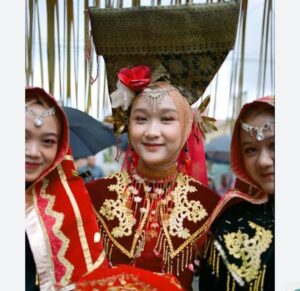
Nestled in the northeastern Indian state of Meghalaya, the Khasi people have long attracted global attention for their matrilineal culture.
Among the Khasi, the youngest daughter traditionally inherits the family property and assumes responsibility for caring for elderly parents. Children take their mother’s surname, and family lineage is traced through women.
Unlike many societies, in which marriage often requires a woman to leave her family home, Khasi women generally remain within their maternal households. At the same time, husbands become part of their wives’ family networks.
The system has sparked debates in recent years, with some men advocating for greater recognition within family structures. Nevertheless, the Khasi remain one of the most prominent examples of female-centred family organisation in the modern world.
The Mosuo of China
Often referred to as one of the world’s last matriarchal societies, the Mosuo people live near Lugu Lake in southwestern China.
Family life among the Mosuo revolves around women. Grandmothers frequently serve as the heads of extended households, overseeing family property, finances, and child-rearing.
One of the community’s most distinctive traditions is the “walking marriage,” where partners maintain separate residences. Children remain with their mother’s family, and maternal uncles often play important roles in raising younger generations.
The Mosuo system challenges many conventional assumptions about marriage and fatherhood, highlighting the diverse ways societies can organise family life.
The Akan of Ghana
Closer to home in West Africa, the Akan people of Ghana have long practised matrilineal inheritance.
Among many Akan communities, family identity and succession traditionally pass through the mother’s lineage. Property, leadership positions, and inheritance often move from a man to his sister’s children rather than to his own biological offspring.
Women hold influential positions within family structures, while maternal relatives play significant roles in shaping children’s lives.
Although modernisation and urbanisation have altered some traditional practices, matrilineal customs remain an important aspect of Akan cultural identity.
The Bribri of Costa Rica
The Bribri indigenous people of Costa Rica provide another remarkable example of female-centred family systems.
In the Bribri culture, land ownership and inheritance are typically passed from mothers to daughters. Women are regarded as guardians of family continuity and play a central role in preserving cultural traditions.
The production of cacao, considered sacred within Bribri society, is traditionally entrusted to women, reinforcing their symbolic and practical importance within the community.
Lessons for a Changing World
The existence of matrilineal and matriarchal societies does not diminish the importance of fathers. Rather, it demonstrates that families can thrive under different structures and cultural traditions.
In many of these societies, fathers continue to provide emotional support, guidance, protection, and care. What differs is the distribution of authority, inheritance, and family identity.
As families continue to evolve in the 21st century, these societies stand as powerful examples that there is more than one way to build a strong and successful family.