Study Links Cyan Colour Change in Pacific Ocean to Growing Microplastic Pollution
Scientists have discovered unusual blue-green changes in the waters surrounding the Great Pacific Garbage Patch, suggesting that accumulated microplastics may be altering the ocean's appearance.

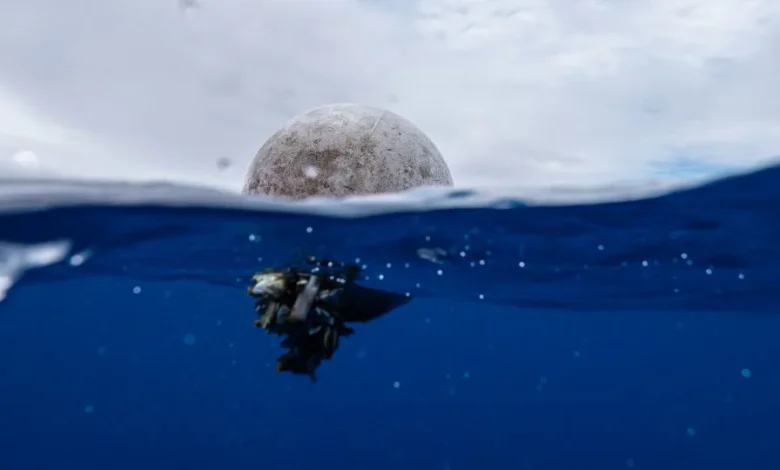
A new study by researchers at the University of Bergen in Norway suggests that microplastic pollution may be changing the colour of the Pacific Ocean around the Great Pacific Garbage Patch. Published on November 5, 2026, in Communications Earth & Environment, the research examined satellite observations covering two decades, from 2002 to 2022. Scientists discovered that parts of the ocean surrounding the pollution zone had become noticeably brighter in blue and green wavelengths, creating a cyan-like appearance compared with surrounding waters.
The research team analysed three independent satellite ocean-colour datasets to investigate the unusual changes. Their findings revealed consistent patterns of blue and green brightening in and around the garbage patch, an enormous accumulation of plastic waste located in the North Pacific between Hawaii and California. Researchers believe that tiny suspended plastic particles, known as microplastics, may be responsible because they scatter and reflect sunlight differently from natural materials found in seawater. These particles are particularly difficult to detect and measure using conventional methods.
To investigate the possible connection, scientists conducted computer simulations comparing natural changes in ocean conditions with scenarios involving microplastic pollution. The results showed that cyan-coloured brightening occurred in 13 per cent of simulations involving microplastics, compared with just 3 per cent when only natural environmental factors were considered. Researchers also estimated that satellite instruments could detect the optical effects of microplastics at concentrations of approximately five milligrams per cubic metre of seawater. However, the study does not establish that plastic pollution is definitively responsible for the observed colour change.
The discovery could provide scientists with a new approach to monitoring microplastic pollution across the world’s oceans. Currently, measuring tiny plastic particles requires expensive and labour-intensive water sampling, making it difficult to assess pollution over large geographical areas. If future investigations confirm the findings through direct measurements in the Pacific, satellite technology could help identify heavily polluted marine environments and support targeted cleanup efforts. Researchers emphasise that further field studies are necessary to establish the connection and determine how widespread the phenomenon may be.