Uber Now Has More Than 30 Autonomous Vehicle Partners as It Builds the World’s Largest Robotaxi Network
Rather than developing self-driving technology itself, Uber is rapidly expanding a global network of more than 30 autonomous vehicle partners, positioning the company at the center of the future driverless transportation ecosystem.

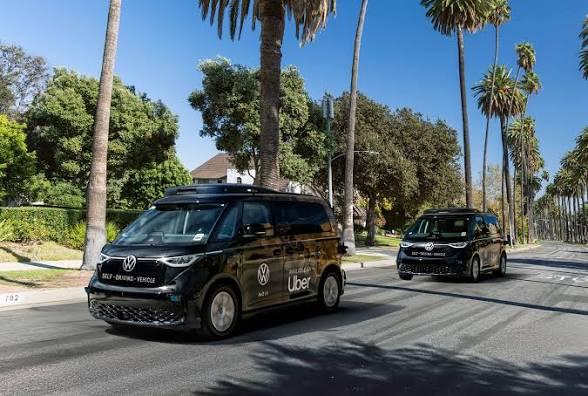
Uber has quietly transformed itself into one of the most influential companies in the autonomous vehicle industry. Instead of competing directly to build self-driving technology, the ride-hailing giant has assembled a network of more than 30 autonomous vehicle partners spanning robotaxis, self-driving trucks, autonomous delivery vehicles, and sidewalk delivery robots. The strategy represents a dramatic shift from Uber’s earlier efforts to develop its own autonomous driving systems and positions the company as a central platform for the future of driverless mobility.
Just a few years ago, Uber exited the costly business of developing its own autonomous driving technology after selling its Advanced Technologies Group. Since then, the company has adopted a different approach—partnering with specialists rather than building every component itself. This asset-light strategy allows Uber to focus on what it already does best: operating one of the world’s largest transportation and logistics platforms while letting dedicated autonomous vehicle companies supply the technology.
Today, Uber’s autonomous ecosystem includes partnerships with companies developing robotaxis, self-driving delivery vehicles, freight trucks, and advanced mapping systems. The network features established names such as Waymo, WeRide, Avride, Pony.ai, Nuro, Aurora, Waabi, May Mobility, Serve Robotics, and several emerging startups operating across North America, Europe, the Middle East, and Asia. Together, these collaborations give Uber access to one of the broadest autonomous mobility ecosystems in the industry.
Rather than replacing human drivers overnight, Uber envisions a hybrid transportation network where autonomous vehicles and human drivers operate side by side. Depending on location, customer demand, weather conditions, traffic, and vehicle availability, riders may receive either a traditional driver-operated vehicle or an autonomous robotaxi through the same Uber app. This flexible model allows Uber to gradually introduce autonomous transportation while maintaining reliable service for millions of daily users.
The expansion comes as autonomous vehicle technology reaches an important turning point. Advances in artificial intelligence, computer vision, machine learning, high-definition mapping, lidar, radar, and sensor fusion have significantly improved the ability of self-driving systems to navigate complex urban environments. These technologies enable vehicles to recognize pedestrians, cyclists, road signs, traffic signals, construction zones, and unexpected obstacles with increasing accuracy while making driving decisions in real time.
Artificial intelligence sits at the heart of every modern autonomous vehicle. Advanced neural networks continuously analyze data collected from multiple cameras, radar systems, lidar sensors, GPS, and onboard computers. Every second, these systems process millions of data points to understand surrounding traffic, predict the behavior of nearby vehicles and pedestrians, and determine the safest path forward. Improvements in AI reasoning and perception have dramatically increased the reliability of these systems over recent years.
Uber’s growing partner network also reflects changing economics within the transportation industry. Developing fully autonomous driving technology requires billions of dollars in research, specialized hardware, testing, and regulatory approvals. By partnering with companies that already possess these capabilities, Uber avoids much of the enormous research cost while still gaining access to the latest self-driving technologies. Meanwhile, autonomous vehicle developers benefit from Uber’s global customer base, marketplace infrastructure, payment systems, routing algorithms, and operational expertise.
Several of Uber’s partnerships have already entered commercial operation. In selected cities, customers can request autonomous rides through the standard Uber application without downloading additional software. Depending on availability, eligible trips may be completed entirely by self-driving vehicles operating within approved service areas. The company expects autonomous ride availability to expand into more cities as additional regulatory approvals are secured and fleet sizes increase.
Uber’s ambitions extend well beyond passenger transportation. The company is also investing heavily in autonomous delivery through Uber Eats. Sidewalk robots and self-driving delivery vehicles are increasingly transporting restaurant meals, groceries, and retail purchases across selected urban markets. These systems promise lower operating costs, faster delivery times, and round-the-clock service while reducing congestion associated with traditional delivery vehicles.
Autonomous freight represents another major opportunity. Several of Uber’s technology partners are developing self-driving trucks capable of transporting goods across long highway routes. Industry experts believe autonomous trucking could help address persistent driver shortages, improve fuel efficiency, reduce operating costs, and increase supply chain reliability. Although widespread deployment remains several years away, many companies view freight automation as one of the most commercially attractive applications of autonomous driving technology.
Uber has also strengthened its position through strategic investments. In addition to partnering with multiple autonomous vehicle developers, the company has committed significant capital to selected projects involving robotaxi fleets, electric vehicles, AI-powered mobility platforms, and supporting infrastructure. These investments reinforce Uber’s long-term strategy of becoming the primary marketplace connecting autonomous transportation providers with customers.
Despite rapid progress, important challenges remain. Autonomous vehicles must continue proving their safety under diverse weather conditions, heavy traffic, complex urban environments, and unpredictable human behavior. Regulatory approval varies significantly between countries and even between individual cities, requiring extensive testing before commercial deployment. Public trust also remains a critical factor, with manufacturers working to demonstrate that autonomous systems can operate safely and reliably under real-world conditions.
Competition within the robotaxi industry is becoming increasingly intense. Companies including Waymo, Tesla, Zoox, WeRide, Pony.ai, and others are expanding commercial operations while investing billions in research and fleet deployment. Unlike many competitors, however, Uber has chosen not to compete by building its own autonomous driving software. Instead, it aims to become the operating platform that connects multiple autonomous vehicle providers with millions of passengers around the world.
Industry analysts believe this platform-first strategy could ultimately become one of Uber’s greatest competitive advantages. If autonomous transportation becomes mainstream, consumers may prefer using a single application that provides access to multiple autonomous fleets rather than downloading separate apps for each provider. Uber’s existing customer base, payment infrastructure, route optimization systems, and global operational experience position it well to serve as that marketplace.
The expansion of Uber’s autonomous partner network also reflects a broader transformation occurring throughout the transportation industry. Artificial intelligence is increasingly reshaping how people travel, goods are delivered, and cities manage mobility. Autonomous vehicles, once viewed as a distant vision, are steadily moving toward everyday reality through advances in AI, sensor technology, cloud computing, and high-performance semiconductor design.
With more than 30 autonomous vehicle partners now supporting its long-term strategy, Uber has established itself as one of the central players in the emerging driverless economy. Rather than building every piece of technology itself, the company is creating an ecosystem where multiple autonomous vehicle developers can scale their innovations through a single global platform. As robotaxis, autonomous delivery services, and self-driving freight continue expanding worldwide, Uber’s partnership-driven model may prove to be one of the most influential approaches shaping the future of transportation.