The impact of this summer’s extreme temperatures on western Europe can now be seen from space after successive heatwaves since May.
Satellite images examined by BBC Verify show shrunken glaciers, scorched areas left by wildfires, green fields turned arid and lower river levels.
And some landmarks have been affected, too. The Palace of Versailles, south of the French capital Paris, appears as an island of trees surrounded by brown fields in these images.
The EU’s climate monitoring service, Copernicus, has confirmed that western Europe experienced its hottest June-to-July period on record.
The immediate cause of the heatwaves has been persistent high-pressure weather systems bringing clear, sunny skies and allowing temperatures to build, according to the Met Office.
But climate change, mainly due to the burning of fossil fuels, has been raising average temperatures for decades and making hot spells much more likely and intense.
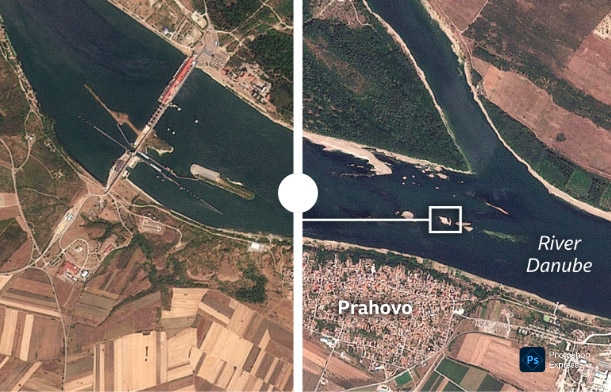
This has led to unusual discoveries on the river bed, including the bones of a mammoth in Bulgaria and a sunken WW2 warship in Serbia. You can see the sunken ship has emerged from the deep in the right-hand image below.
And where the river snakes through Hungary and Romania, nuclear power stations have been forced to shut down or run at reduced capacity for some time because of an inability to use river water for cooling.
Meanwhile on the Rhine, some cargo vessels have been left stranded and river cruises have been cancelled.
Ongoing measurements suggest this summer could become one of the worst ever recorded for melting Alpine glaciers, with more than a month of the season still to go.
After a mild winter, glaciers had less snow cover than usual at the end of April – and an unusually early heatwave the following month accelerated the melting of snow.
This exposed the ice beneath, leaving the glaciers vulnerable to melting faster in subsequent heatwaves.