Webb Telescope Reveals How a Supermassive Black Hole Feeds
New observations from the James Webb Space Telescope have given astronomers one of their clearest views yet of how enormous black holes pull in and recycle the gas needed for continued growth.

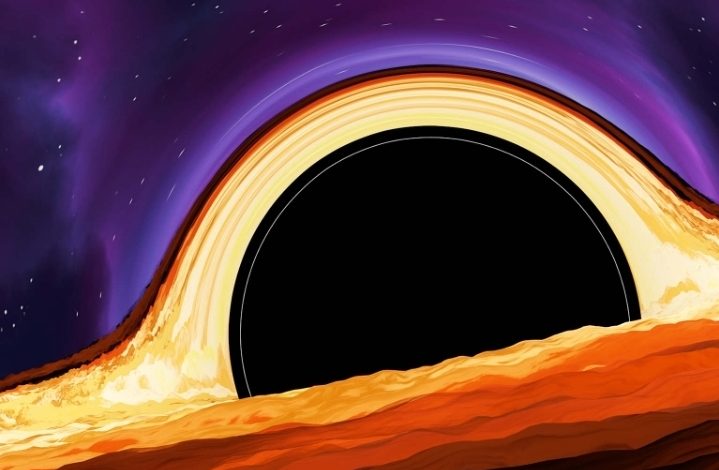
The James Webb Space Telescope has captured new evidence showing how a supermassive black hole can feed on surrounding cosmic gas. Astronomers studying the galaxy NGC 4696 observed long filaments of gas extending toward its central black hole, offering a detailed look at the processes that help these enormous objects continue growing over time.
The observations suggest that the gas is funneled inward through a vast structure surrounding the black hole. Scientists detected material moving into a spinning disk approximately 800 light-years wide, where the gas can orbit at extremely high speeds before eventually moving closer to the black hole. The discovery helps address a long-standing question about how supermassive black holes maintain a steady supply of material.
Researchers believe the process may involve a remarkable recycling system. Powerful jets from the black hole can heat surrounding gas and push it outward, but as the gas cools, some of it may eventually fall back toward the center. This creates a cycle in which the black hole’s own activity could indirectly help regulate the supply of material available for future growth.
The findings are important because supermassive black holes play a major role in the evolution of galaxies. By influencing the movement and temperature of surrounding gas, they can affect star formation and the long-term development of entire galaxies. Webb’s powerful infrared instruments allow astronomers to study these environments with a level of detail that was previously difficult to achieve.
The discovery adds another important piece to the puzzle of how the universe’s largest black holes formed and grew. As the James Webb Space Telescope continues observing distant galaxies and their central black holes, scientists expect to gain a deeper understanding of the relationship between black holes, galaxies and the enormous structures that shape the universe.