Goldman Sachs Quadruples Its AI-Powered Workforce
The Wall Street giant is rapidly expanding its use of artificial intelligence agents, signaling how major financial institutions are preparing for a future where human employees work alongside large numbers of AI systems.

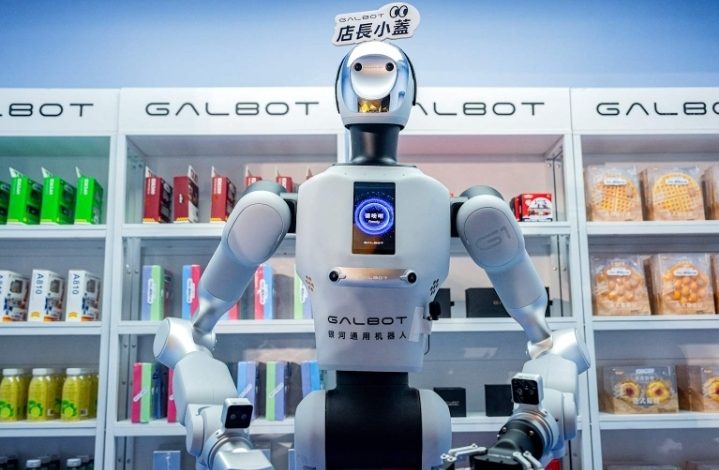
Goldman Sachs is reportedly accelerating its artificial intelligence strategy by dramatically expanding the number of AI agents used across the company. The move reflects a growing belief within major financial institutions that AI will increasingly function as a digital workforce, handling repetitive and complex tasks alongside human employees rather than simply operating as a basic productivity tool.
The expansion comes as Goldman Sachs itself has been closely studying the potential impact of AI on employment. The bank’s research estimates that around 300 million jobs globally could be exposed to AI automation, while in the United States AI could potentially automate tasks representing roughly 25% of total work hours. However, Goldman Sachs researchers have emphasized that automation is likely to transform many jobs rather than simply eliminate them outright.
AI agents are becoming particularly important because they can perform multi-step tasks with limited supervision. In a financial institution, such systems could assist with research, data analysis, software development, document processing and other knowledge-intensive work. The strategy represents a shift away from traditional chatbots toward more autonomous AI systems capable of completing larger portions of professional workflows.
The rapid growth of AI adoption has also intensified concerns about the future of human employment. Goldman Sachs economist Joseph Briggs recently estimated that AI-driven changes could displace around 9% of the U.S. workforce over a decade, equivalent to roughly 15 million workers needing to leave or transition from their existing positions. The research argues that the speed of the transition will be critical in determining its impact on unemployment.
For Goldman Sachs and other major companies, the challenge will be finding the right balance between automation and human expertise. AI may significantly increase productivity, but complex decision-making, accountability and professional judgment still require human oversight. The expansion of AI agents across Wall Street suggests that the future workplace may not simply involve fewer people—it could increasingly involve smaller human teams managing much larger digital workforces.