
Nvidia’s Jensen Huang Urges G20 Nations to Move Faster on AI
Nvidia CEO Says Countries Must Build More AI Infrastructure and Focus Regulation on Real-World Risks to Avoid Falling Behind in the Global AI Race.

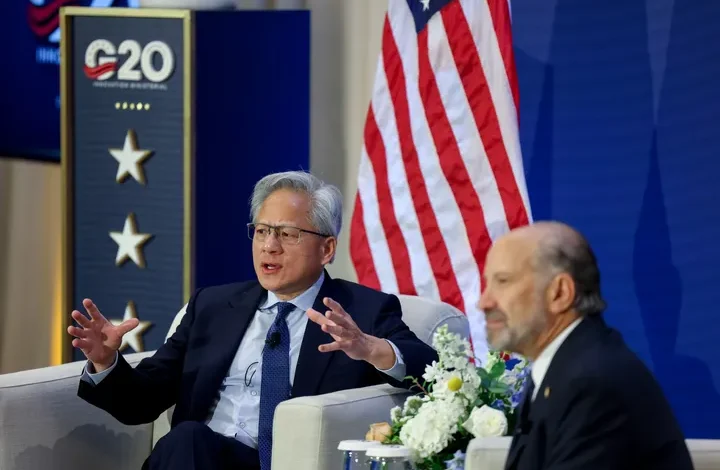
Nvidia CEO Jensen Huang has urged G20 countries to accelerate their adoption of artificial intelligence and invest heavily in the infrastructure needed to support the technology. Speaking at the G20 Innovation Ministerial meeting in Chapel Hill, North Carolina, Huang said nations that fail to develop sufficient AI infrastructure risk falling behind as the technology becomes increasingly important to their economies.
Huang argued that artificial intelligence should be viewed as essential national infrastructure, similar to electricity, roads, water systems and the internet. He called on governments to build more data centres and expand the computing capacity needed to develop and deploy advanced AI systems. His comments come as demand for AI computing continues to grow rapidly, increasing pressure on countries to secure enough electricity, chips and data-centre capacity.
The Nvidia chief also encouraged governments to avoid creating regulations based primarily on hypothetical or theoretical risks. Instead, he said policymakers should focus on addressing concrete problems that emerge from the use of AI. His position broadly aligns with the U.S. administration’s push at the G20 meeting for a lighter regulatory approach that encourages technological development and innovation.
Huang also pushed back against concerns that artificial intelligence will simply eliminate large numbers of jobs. He argued that AI is more likely to change the nature of work by automating individual tasks while leaving the broader purpose of many jobs intact. He warned that the greater economic risk for countries could be failing to take advantage of AI while other nations move ahead with investment and adoption.
The comments highlight the growing importance of AI infrastructure in the global technology race. As companies develop increasingly powerful models, governments are being challenged to provide reliable electricity, computing resources, skilled workers and appropriate policies. Huang’s message to the G20 is that countries should move quickly to build these foundations while ensuring that regulation addresses genuine problems without unnecessarily slowing innovation. With AI increasingly viewed as a strategic economic asset, the decisions governments make today could have a major impact on their technological competitiveness in the years ahead.




