
Tesla Unveils Rare-Earth-Free Motor for Cybercab
Tesla’s New Cybercab Drive Unit Uses No Rare-Earth Metals, Marking a Potential Shift in EV Manufacturing and Supply-Chain Dependence.

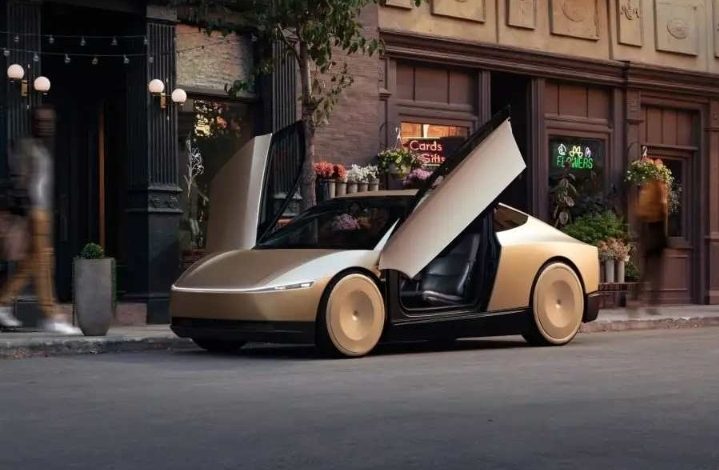
Tesla has unveiled a new electric drive unit for its Cybercab that uses no rare-earth metals, marking a significant development in the company’s effort to reduce dependence on materials that are heavily concentrated in global supply chains. CEO Elon Musk described the achievement as particularly difficult to accomplish while maintaining the performance required for an electric vehicle.
The new motor was highlighted alongside Tesla’s latest Cybercab developments in Austin. Reports indicate that the drive unit is smaller and lighter than previous Tesla designs, with the company claiming improvements in efficiency and power density. The development builds on Tesla’s earlier commitment to develop electric motors that could operate without rare-earth elements.
Rare-earth materials are widely used in high-performance permanent magnets found in many electric motors. China plays a dominant role in the processing and supply of these materials, making them an important consideration for automakers attempting to strengthen supply-chain resilience. Recent restrictions and disruptions involving rare-earth exports have added further pressure on manufacturers to explore alternatives.
Tesla’s development could therefore have implications beyond the Cybercab itself. Reducing the need for rare-earth materials could lower exposure to supply shortages and geopolitical disruptions, although analysts caution that scaling the technology and reproducing its performance across Tesla’s wider vehicle lineup could present additional challenges.
The breakthrough also reflects a broader industry push toward alternative electric-motor technologies. Other manufacturers and technology companies are developing rare-earth-free motors and magnets, suggesting that competition over materials, efficiency and manufacturing costs could become an increasingly important part of the next generation of electric vehicles.




