Largest Supernova Catalogue Offers New Clues About Dark Energy
Astronomers Use the Largest Standardised Collection of Type Ia Supernovae Yet to Investigate Whether Dark Energy Has Changed Over Cosmic History.

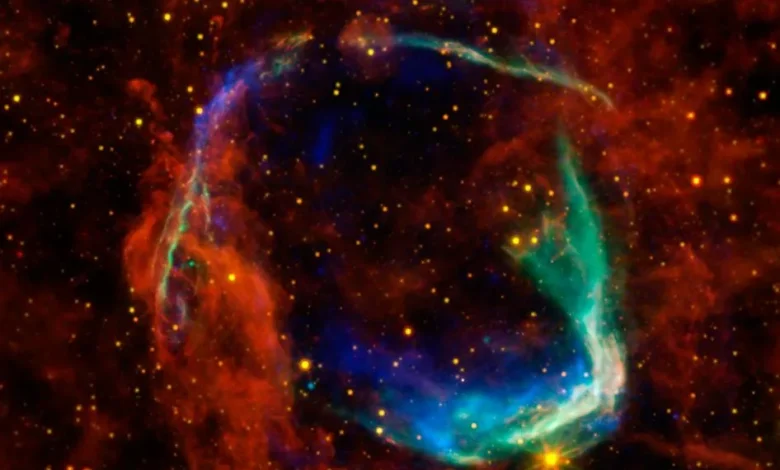
Astronomers have assembled one of the most extensive standardised catalogues of Type Ia supernovae ever produced, giving researchers a powerful new dataset for studying the expansion of the Universe. The catalogue, known as Union3, brings together observations of roughly 2,000 Type Ia supernovae recorded using different telescopes and surveys.
Type Ia supernovae are particularly valuable to cosmologists because their predictable brightness allows scientists to estimate their distances across the Universe. By comparing those distances with how quickly their light has been stretched by cosmic expansion, researchers can investigate how the Universe has evolved over billions of years.
The new catalogue also addresses an important challenge in astronomical research: observations collected by different instruments can contain small systematic differences. Researchers worked to standardise the measurements, creating a more consistent dataset that can be used to test competing models of cosmic expansion and dark energy.
One of the major questions raised by the observations is whether dark energy, the phenomenon associated with the accelerating expansion of the Universe, has remained constant throughout cosmic history. Earlier results from the Dark Energy Spectroscopic Instrument had already suggested that dark energy might evolve over time, although the evidence does not yet amount to a definitive discovery.
The findings could therefore have major implications for cosmology if future observations continue to support an evolving form of dark energy. Scientists are continuing to combine supernova measurements with other large astronomical surveys to determine whether the apparent deviation from the standard cosmological model represents new physics or an effect that can be explained by measurement uncertainties and systematic differences.