
Russia’s Oil Export Revenue Falls as Sanctions, Attacks and Lower Shipments Weigh on Energy Income
Russia’s oil and fossil-fuel export earnings weakened in August as Ukrainian strikes disrupted energy infrastructure and lower export volumes put additional pressure on Moscow’s revenue.

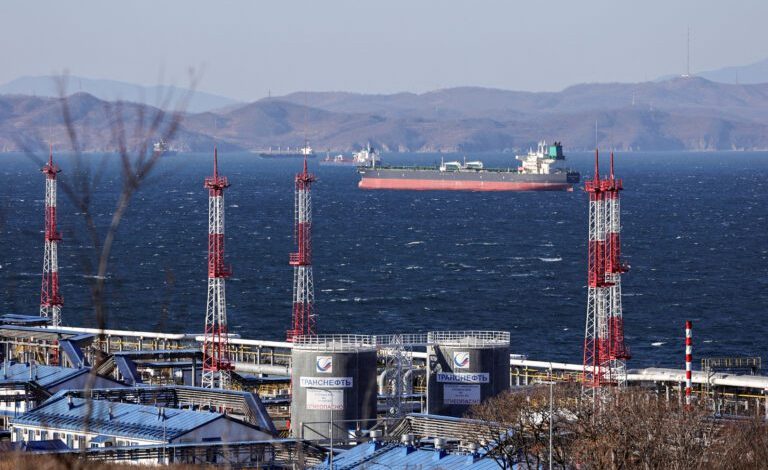
Russia’s energy sector is facing increasing pressure as disruptions to oil infrastructure, lower export volumes and weaker earnings combine to reduce the financial benefits Moscow receives from its petroleum trade. The Centre for Research on Energy and Clean Air reported that Russia’s fossil-fuel export revenue fell 8% month-on-month in August 2026 to about €604 million per day, while export volumes declined by 7%.
The decline was particularly visible in Russia’s seaborne crude trade. According to the Centre for Research on Energy and Clean Air, revenue from seaborne crude exports fell by 13% during August. Ukrainian attacks disrupted the Sheskharis oil terminal and contributed to a 58% month-on-month decline in loadings at Novorossiysk, with operations at the port reportedly halted for nine consecutive days.
Russia’s oil-product exports have been hit even harder. Revenue from seaborne oil products fell by 32% month-on-month to approximately €78 million per day, the lowest level recorded since Russia launched its full-scale invasion of Ukraine. Earlier data from the Kyiv School of Economics also showed that Russian oil-product exports had already fallen to exceptionally low levels, with total oil-product exports dropping 31.6% in July.
The pressure is also affecting Russia’s longer-term production outlook. The International Energy Agency recently cut its forecast for Russian crude production in 2026 to 8.7 million barrels per day, following an August production level of about 8.36 million barrels per day. Separately, a Russian government draft forecast reportedly projects 2026 oil production at its lowest level in 17 years, reflecting the combined effects of the war, refinery disruptions and restrictions on fuel exports.
Despite these difficulties, Russia remains a major participant in global oil markets, with countries such as China and India continuing to play important roles in its energy trade. However, the latest figures demonstrate that maintaining export volumes does not necessarily guarantee strong revenues. Disrupted infrastructure, changing oil prices, sanctions and restrictions on petroleum-product exports can significantly reduce the amount of money Moscow earns from its energy sector. The continuing weakness therefore represents an important economic challenge for Russia as the war and pressure on its energy infrastructure continue.




