
China Calls for UN-Led Global Governance of Artificial Intelligence
Beijing is pushing for the United Nations to play a central role in establishing international rules for AI as competition between major AI powers intensifies.

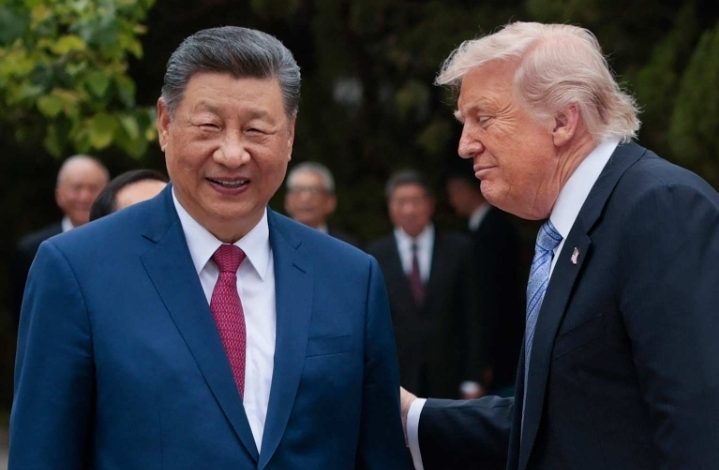
China is stepping up its call for a United Nations-led framework for global artificial-intelligence governance, arguing that AI development should be guided by international cooperation rather than dominated by a small group of technologically advanced countries. Beijing has consistently supported the UN as the main channel for coordinating global AI governance and has used international forums to promote broader participation in decisions over the technology.
The proposal comes as artificial intelligence becomes increasingly important to economic growth, national security and technological competition. China and the United States are currently engaged in an intense race over advanced AI capabilities, with Chinese companies rapidly narrowing the performance gap despite restrictions on China’s access to some advanced semiconductor technologies. Recent developments involving companies such as DeepSeek, Moonshot AI, Z.ai and Alibaba demonstrate China’s growing strength in the AI sector.
Beijing argues that global AI governance should be inclusive, giving developing countries a meaningful role in establishing international standards. China’s approach emphasizes international cooperation, technical standards and government oversight rather than simply slowing technological development. Chinese authorities have also been developing domestic AI safety standards and regulations designed to keep humans responsible for the deployment and operation of increasingly capable AI systems.
The issue has also become closely connected to concerns about AI-generated misinformation, cybersecurity and social stability. China’s Ministry of State Security has warned that generative AI could be exploited through deepfakes, automated misinformation and other forms of what it describes as cognitive warfare. These concerns have strengthened Beijing’s argument that international rules are needed to address AI risks that can cross national borders.
China’s position is gaining relevance as countries debate how much authority governments and international organizations should have over advanced AI. While Beijing advocates stronger international coordination through the UN, some U.S. policymakers oppose a centralized international regulatory body, arguing that excessive regulation could weaken American technological competitiveness. The disagreement reflects a broader struggle over not only who leads AI development, but also who gets to establish the rules governing its future.




