
Neuralink Demo Shows Brain Implant Helping a Patient Communicate
A new Neuralink demonstration shows a clinical-trial participant using a brain-computer interface to communicate, highlighting the potential of the technology for people with severe speech impairments.

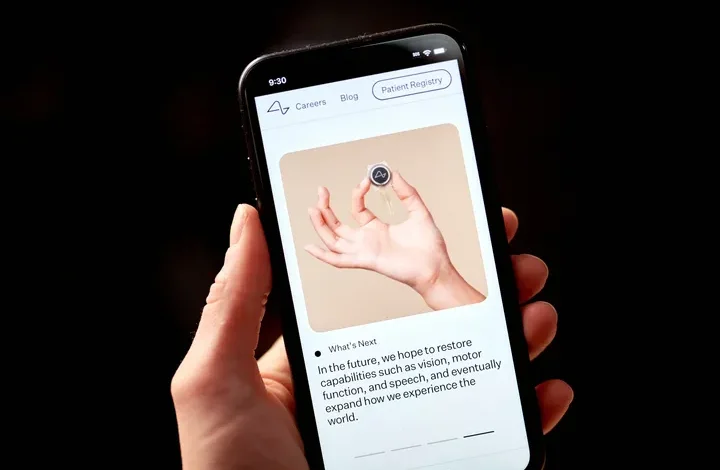
Neuralink has released a short video showing one of its clinical-trial participants communicating through a brain-computer interface. In the demonstration, the participant appears to use neural signals to produce spoken communication through a computer system, including expressing a personal message to someone close to him. Neuralink described the moment as a “beautiful surprise,” while also cautioning that the demonstration may not represent the experience or future outcomes of every participant.
The technology is part of Neuralink’s broader effort to develop implantable brain-computer interfaces that can translate signals from the brain into commands for digital devices. The company’s N1 implant records neural activity and uses software to interpret those signals, allowing participants to interact with computers without conventional physical controls. Earlier demonstrations have shown participants controlling computer cursors, playing games and performing other digital tasks using neural activity.
The latest communication demonstration is particularly significant because restoring communication is one of the major goals of brain-computer interface research. Other research groups have also reported substantial progress in this area. A recent study involving an experimental brain implant demonstrated speech and gesture control through a digital avatar, while another long-term study showed a person with ALS using a brain-computer interface to communicate extensively in everyday life. These developments indicate that researchers are increasingly moving beyond laboratory demonstrations toward systems that can support real-world communication.
Neuralink has also been expanding the range of activities its participants can perform. In July, the company demonstrated participants with paralysis controlling powered wheelchairs through neural signals, extending the technology beyond computer interaction toward physical-device control. Neuralink has additionally reported progress in making the implantation procedure potentially faster and less invasive, including a clinical procedure designed to insert electrode threads through the protective dura surrounding the brain rather than removing a section of it.
Despite the progress, Neuralink’s technology remains investigational rather than an established consumer medical product. Its demonstrations involve clinical-trial participants, and individual results can vary considerably. The company itself has emphasized that its demonstrations do not necessarily predict outcomes for all participants or future users. The latest video nevertheless illustrates the direction in which brain-computer interfaces are developing: systems designed to translate neural activity into communication and control, potentially giving people with severe neurological disabilities new ways to interact with the world.




