
AI Spending Eclipses Historic Railway and Internet Investment
The global artificial intelligence buildout is attracting unprecedented amounts of capital, with projected spending on AI infrastructure expected to surpass the inflation-adjusted cost of major railway expansions and the construction of the internet.

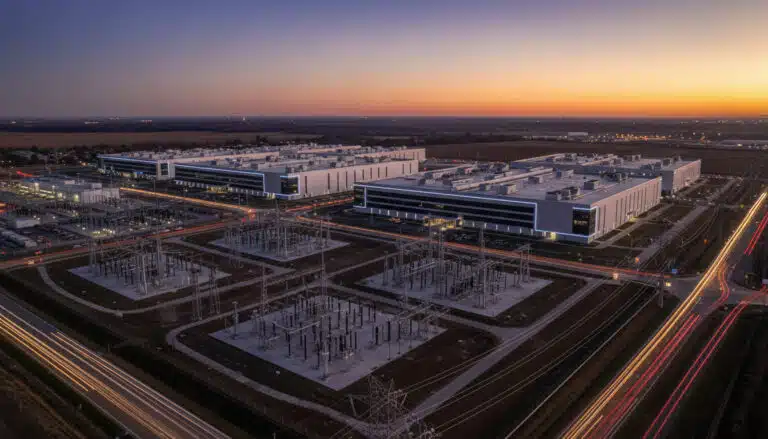
The artificial intelligence boom is driving an investment surge on a scale rarely seen in modern economic history. According to a PwC projection cited by Reuters and other financial publications, global spending on AI-related data-centre infrastructure could reach nearly $32 trillion by 2050, with an upside scenario of about $50 trillion if adoption accelerates. The scale of the investment is expected to exceed the inflation-adjusted spending associated with historic infrastructure transformations, including railway construction in the United States and United Kingdom and the development of the internet.
A major reason for the enormous spending is that AI infrastructure requires continual upgrades. Unlike traditional infrastructure such as railways, data-centre computing equipment—including GPUs, CPUs, servers, memory and networking systems—can become technologically outdated within a relatively short period. PwC estimates that AI infrastructure effectively undergoes a major rebuilding cycle every four to six years, meaning companies must repeatedly spend billions to maintain and expand computing capacity. Current AI capital expenditure is estimated at around $800 billion, with annual spending expected to rise substantially over the coming years.
The spending is also being driven by expectations that AI will create enormous new sources of revenue and productivity. Bain & Company estimates that annual AI infrastructure spending could reach approximately $1.5 trillion by 2031. For that level of investment to be economically sustainable, the AI industry could need roughly $6 trillion in annual revenue by the same year. Bain estimates that new products and services—including AI-powered search, advertising, autonomous systems and physical AI—could provide about $4.2 trillion of that revenue, while productivity improvements in areas such as software development, sales, marketing and customer service could contribute another $1 trillion to $1.4 trillion.
The enormous spending has nevertheless raised concerns about whether AI companies can generate enough economic value to justify the capital being deployed. Reuters reports that companies such as Anthropic are planning hundreds of billions of dollars in future spending, while analysts are questioning whether productivity gains and AI revenues will arrive quickly enough to support the current level of investment. A separate analysis by Stanford economists has estimated a nearly $1 trillion gap between the AI-related spending of major hyperscalers and the AI revenue they have generated since 2024.
Despite those concerns, investors and technology companies continue to pour money into AI infrastructure because they expect the technology to become a fundamental part of the global economy. The comparison with railways is particularly significant because railway expansion transformed transportation, trade and industrial production over generations. AI is now undergoing a similarly massive infrastructure buildout, but at a much faster technological cycle. Whether the investment eventually produces returns comparable to the infrastructure revolutions of the past will depend on how quickly AI creates new markets, improves productivity and generates sustainable revenue.




