Lenders Demand Stronger Guarantees for Nvidia AI Chip Financing
Banks and credit investors are demanding stronger protections as they question how long Nvidia’s advanced AI chips can retain their value and generate enough revenue to support massive amounts of debt.

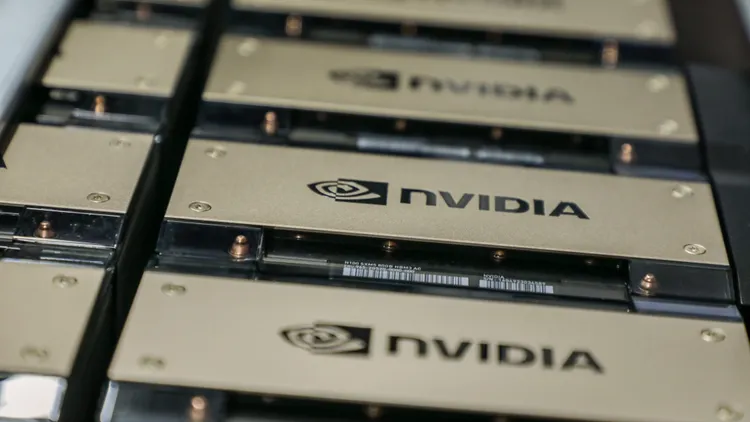
Nvidia’s ambitious plan to help finance the expansion of artificial intelligence infrastructure is facing growing scrutiny from Wall Street lenders. The company has promoted the idea that its advanced graphics processing units can remain productive and generate revenue for many years, potentially making them suitable collateral for large financing deals. However, banks and credit investors remain cautious and are asking for stronger guarantees before committing to loans backed by AI chips.
A major point of disagreement is the expected useful life of Nvidia’s GPUs. Nvidia argues that some of its most advanced systems could generate revenue for up to a decade, while banks typically underwrite GPUs using a much shorter three- to four-year depreciation period. This difference matters because lenders need to estimate how much an asset could be worth if a borrower defaults and the hardware has to be sold. Investors are therefore seeking higher interest rates, larger financial cushions and stronger repayment protections to compensate for the uncertainty.
Nvidia’s broader financing ambitions are enormous, with the company pursuing a strategy that could support hundreds of billions of dollars in AI infrastructure investment. The company has pointed to evidence that major cloud providers are already extending server depreciation periods to five or six years. Valuation research has also suggested that some of Nvidia’s newest GB300 systems could potentially have useful lives approaching nine or ten years. Credit investors, however, remain reluctant to rely solely on these projections because the AI hardware market is still relatively young and technology can become obsolete quickly.
Previous AI financing deals illustrate what lenders currently consider acceptable protection. CoreWeave secured an $8.5 billion GPU-backed facility in which lenders were supported by contractual payments from Meta, giving creditors greater confidence that the debt would be repaid. Broadcom has also backed more than 80% of a $35 billion financing structure connected to AI computing capacity for Anthropic. These transactions suggest that investors are more comfortable when valuable AI hardware is supported by predictable customer revenues or guarantees from financially strong companies rather than relying on the chips themselves as collateral.
The debate highlights a wider financial challenge surrounding the AI boom. Billions of dollars are being borrowed to construct data centres and purchase the computing equipment needed to power AI models, while lenders are becoming increasingly careful about whether future AI revenues will justify the enormous investment. Nvidia’s strategy could help create a new asset class around AI computing infrastructure if the technology proves durable and profitable, but creditors appear unwilling to accept the industry’s most optimistic assumptions without additional protection. For now, stronger guarantees and dependable customer contracts are becoming increasingly important as Wall Street determines how much risk it is willing to take on the AI expansion.