NATO Drafts ‘Theory of Victory’ Using Drones and AI
NATO is preparing a new defensive strategy for its eastern flank that would integrate drones, artificial intelligence and conventional military forces to respond rapidly to a potential Russian attack.

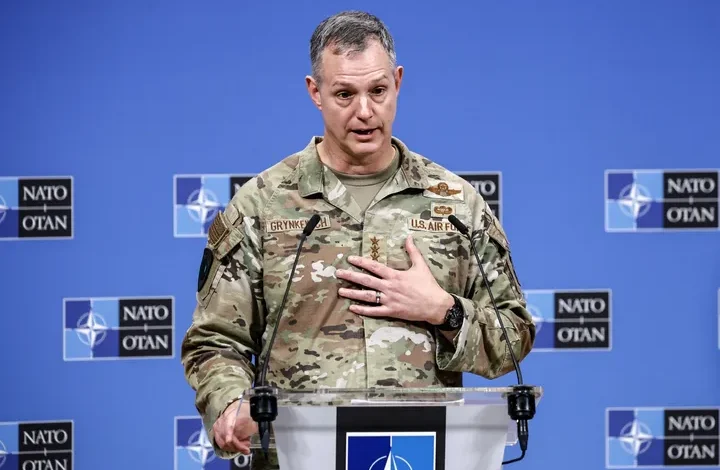
NATO is developing a strategy known as the “Theory of Victory” aimed at explaining how the alliance would respond to a possible military incursion on its eastern flank. The plan is being developed under Supreme Allied Commander Europe General Alexus Grynkewich and is expected to be presented in Poland on October 12. An unclassified version of the document has been reviewed by Bloomberg, while NATO officials have confirmed the existence of the strategy and stressed that its purpose is defensive.
The proposed strategy places greater emphasis on integrating emerging technologies with NATO’s traditional military capabilities. If the alliance were attacked, the plan would rely on conventional ground forces alongside low-cost drones, minimally crewed systems and AI-enabled targeting. The objective would initially be to stop an invading force and prevent it from gaining momentum before using additional capabilities to disrupt its command and control systems.
Artificial intelligence is becoming an increasingly important part of NATO’s wider defence planning. The alliance has already committed more than $40 billion over five years to counter-drone capabilities and plans to train five times as many drone operators by the end of 2027. NATO’s communications and information agency is also developing AI systems capable of combining radar, cameras, radio-frequency detectors and acoustic sensors to create a more complete picture of drone activity.
The new strategy reflects lessons learned from the war in Ukraine, where inexpensive drones, electronic warfare and rapidly evolving autonomous systems have transformed battlefield operations. NATO has previously discussed creating an “autonomous zone” along parts of its eastern flank in which unmanned systems could detect and respond to threats. Its Next Generation Targeting programme is also designed to use AI and data management to reduce the time required to move from detecting a threat to making a decision, while NATO says human judgment will remain the ultimate authority.
NATO Secretary General Mark Rutte has said there are currently no indications that Russia is preparing a conventional attack on the alliance, although he has warned that Europe must remain prepared for persistent hybrid threats. The “Theory of Victory” is therefore being presented as a deterrence and preparedness strategy rather than evidence that NATO expects an imminent war. By combining conventional forces with drones and AI-supported systems, NATO wants potential adversaries to conclude that an attack would fail while strengthening the alliance’s ability to respond if deterrence breaks down.