
NVIDIA Releases Nemotron 3.5 Open AI Models for Autonomous Agents
NVIDIA has expanded its Nemotron AI family with three new open models designed to power autonomous agents, analyse complex documents and run AI tasks on both enterprise servers and local devices.

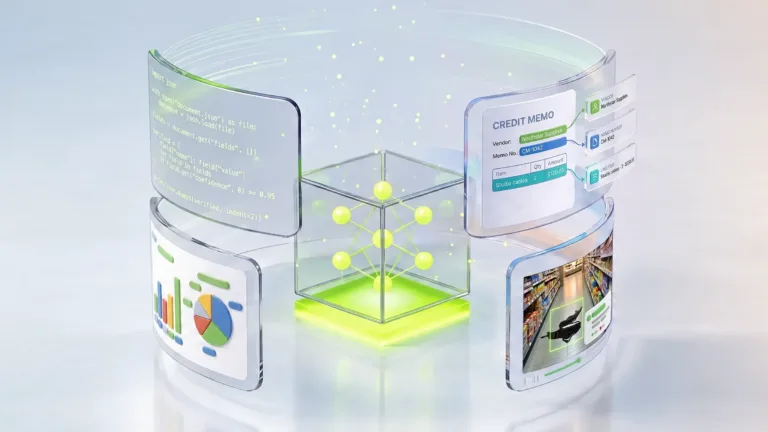
NVIDIA has announced a new generation of open artificial intelligence models under its Nemotron 3.5 family, targeting businesses and developers building autonomous AI agents. On October 15, 2026, the company introduced Nemotron 3.5 Super VL, a 120-billion-parameter multimodal model, alongside two smaller models known as Nemotron 3.5 Bolt 74B-A9B and Nemotron 3.5 Bolt E4B. The releases are designed to make advanced AI capabilities available across different computing environments, from large enterprise data centres to desktop computers and smaller devices. According to NVIDIA, the models can support applications that require continuous operation, including document processing, business automation, visual analysis and multi-step workflows. The company is also releasing supporting datasets and development resources to encourage developers to customise the models for their own applications.
The flagship Nemotron 3.5 Super VL is designed to understand both text and visual information, allowing it to analyse documents, images, webpages, tables and charts within a single model. It uses a mixture-of-experts architecture containing approximately 120 billion parameters, with around 12 billion activated for each token processed. NVIDIA says this design allows the model to deliver strong performance without activating its entire parameter count for every operation. The company also claims that Super VL can complete specialised agentic tasks up to five times faster than competing open models in its class. These tasks include following instructions, using software tools, analysing visual information and completing multi-step business processes. Although the reported results are promising, independent evaluations will be important for determining how the model performs across different real-world workloads.
Alongside the flagship model, NVIDIA introduced Nemotron 3.5 Bolt 74B-A9B, a smaller system designed for local AI workloads. The model uses a 74-billion-parameter architecture with approximately nine billion active parameters and is optimised to operate within a 24GB memory footprint using aggressive quantisation. This makes it suitable for supported NVIDIA RTX systems and DGX Spark hardware, allowing developers to run certain AI-agent tasks locally rather than sending every request to a cloud service. Local deployment can offer businesses greater control over sensitive information, reduce dependence on external APIs and provide more predictable operating costs. NVIDIA also announced Nemotron 3.5 Bolt E4B, a compact model designed to operate within a four-gigabyte memory footprint. The company scheduled that version for release on October 23, 2026, while Super VL and Bolt 74B-A9B are available now.
A major focus of the release is the growing demand for AI agents capable of working continuously with limited human supervision. Unlike traditional chatbots, autonomous agents can use tools, retrieve information, evaluate results and perform multiple steps towards a defined objective. Super VL is intended to support tasks such as extracting financial information from documents, reviewing business records, interpreting charts and assisting with research. NVIDIA says organisations including Ramp, Dream, Lila Sciences and R1 are customising the model for specialised applications. The company is also making training datasets and reinforcement-learning environments available to help developers adapt its capabilities. However, businesses deploying autonomous agents will still need appropriate permission controls, monitoring and human review, particularly when the systems handle financial information, medical records or other sensitive data.
The launch also strengthens NVIDIA’s position in the open-weight AI market, where developers increasingly want greater control over how models are trained, modified and deployed. By making model weights and development resources available, NVIDIA allows organisations to customise AI systems for specific tasks instead of relying exclusively on closed commercial services. The strategy also supports the company’s wider hardware business because many developers running these models will use NVIDIA GPUs and related infrastructure. Nevertheless, open-weight models are not automatically free to operate: organisations may still need suitable hardware, electricity, storage, engineering expertise and ongoing security maintenance. Developers must also check each model’s licence and deployment requirements before using it commercially.
With Nemotron 3.5 Super VL and the Bolt models, NVIDIA is attempting to make specialised AI agents more accessible across a wider range of computing environments. The flagship model targets complex multimodal work, while the smaller versions are designed to bring agentic capabilities closer to users’ own devices. The success of the release will depend on how well the models perform outside company benchmarks, how easily developers can integrate them into existing systems and whether their efficiency advantages translate into lower operating costs. As competition intensifies among NVIDIA, OpenAI, Anthropic, Google and open-model developers, the market is increasingly focused not only on model intelligence but also on deployment flexibility, speed and the ability to complete useful work .




