
IMF Chief Warns AI-Driven Growth Could Mask Financial Vulnerabilities
International Monetary Fund Managing Director Kristalina Georgieva has warned that the artificial intelligence boom could conceal deeper weaknesses in the global economy, as rising debt, expensive energy and uncertain investment returns threaten financial stability.

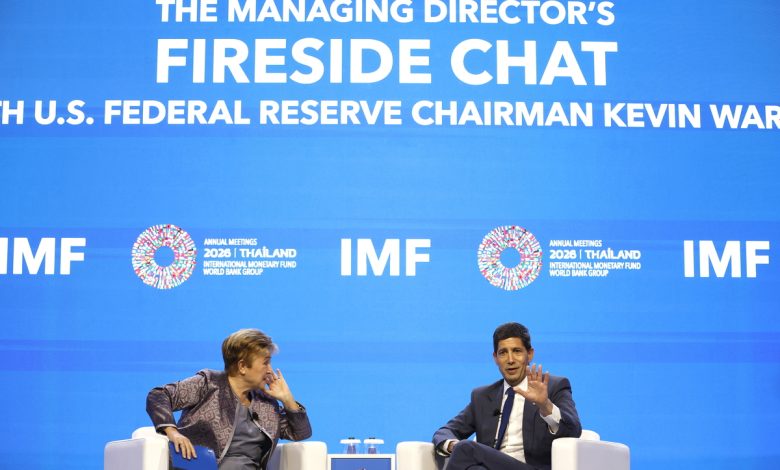
International Monetary Fund (IMF) Managing Director Kristalina Georgieva has raised concerns that strong investment in artificial intelligence is helping sustain global economic growth while potentially hiding underlying financial vulnerabilities. Her warning comes as technology companies, investors and governments commit enormous sums to AI infrastructure, including advanced semiconductors, data centres and computing networks. Although these investments are supporting economic activity, the IMF chief has cautioned that the expected productivity gains may take longer to materialise than investors anticipate. If businesses fail to generate sufficient returns from their AI investments, the resulting financial pressure could affect stock markets, corporate borrowing and economic growth. Georgieva has therefore urged policymakers to avoid assuming that the current technology boom will automatically deliver lasting prosperity.
The concern is particularly significant because the global economy is facing several challenges simultaneously. Rising energy costs, geopolitical conflicts, trade tensions and increasing government borrowing are putting pressure on businesses and national budgets. According to the IMF’s October 2026 economic outlook, global growth is projected to reach 3.1% this year, slightly above the institution’s previous forecast of 3.0%. However, the organisation has warned that this growth depends partly on continued strength in AI-related investment. The IMF has also highlighted the possibility that a prolonged conflict in the Middle East and sustained high oil prices could weaken economic activity further. These competing forces mean that headline growth figures may not fully reflect the risks facing individual countries, companies and households.
Another major concern is the possibility of a sharp correction in AI company valuations. Technology shares have benefited from investor expectations that AI will transform productivity and generate substantial future profits. However, if those expectations prove excessive, investors could reassess the value of major technology companies, triggering losses across financial markets. The IMF has warned that a steep decline in AI investment could reduce global economic output by 1.1% by 2028 under one adverse scenario, with a larger impact on the United States. The risks extend beyond publicly traded companies because AI infrastructure projects increasingly involve borrowing, complex financing arrangements and financial relationships between large technology firms and smaller suppliers. A downturn could therefore spread through credit markets, investment portfolios and business spending.
Georgieva has also stressed that AI’s benefits and risks will not be distributed equally. Wealthier economies with advanced digital infrastructure, reliable electricity and access to capital are better positioned to adopt the technology and benefit from productivity improvements. Developing countries may struggle to compete if they lack the infrastructure, skilled workers and financing needed to participate in the AI economy. At the same time, rapid automation could disrupt employment and increase pressure on workers whose roles can be performed by increasingly capable systems. Georgieva has argued that governments and technology companies must establish appropriate safeguards and ethical frameworks to manage these challenges. She has supported a combination of industry self-regulation and government involvement, while warning that the consequences of poorly managed AI development could outweigh its benefits.
The IMF’s warning does not mean that an AI-driven financial crisis is inevitable. Instead, it highlights the importance of ensuring that investment expectations remain connected to realistic business results. Companies must demonstrate that their spending on AI can produce sustainable revenue and measurable productivity improvements, while financial regulators need to monitor borrowing, market concentration and exposure to potential losses. Governments must also manage public debt carefully as borrowing costs rise and competing demands place pressure on national budgets. For investors, the message is that technological progress alone does not guarantee that every company involved in the AI boom will succeed financially. The long-term economic impact of artificial intelligence will depend not only on its technical capabilities, but also on how responsibly businesses, investors and governments manage the financial risks associated with its rapid expansion.




