Kenya Court to Deliver Verdict in Pastor Paul Mackenzie’s Mass Murder Trial
Doomsday preacher Paul Mackenzie and 29 followers face charges over the deaths of 191 people, all but one of them children, in a case linked to alleged starvation at a religious group’s settlement in Shakahola Forest.

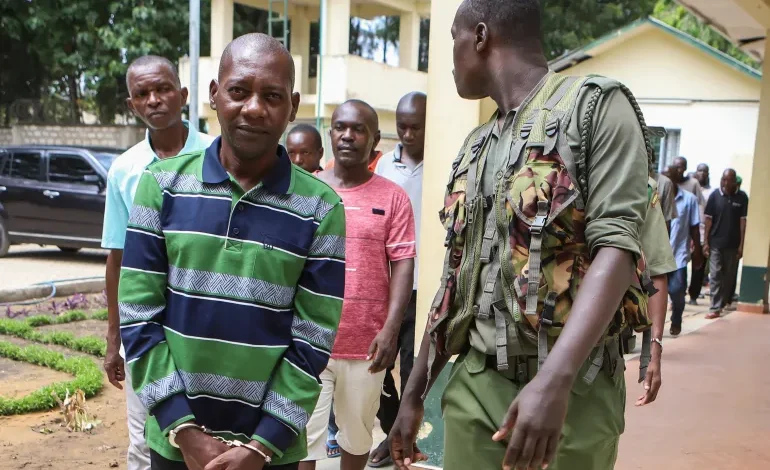
A Kenyan court is set to deliver its judgment in the mass murder trial of doomsday preacher Paul Mackenzie and 29 of his followers, who are accused of the deaths of 191 people, most of them children.
Prosecutors allege that the defendants encouraged or forced children to starve themselves to death so they could “meet Jesus”, as part of an extremist religious doctrine that rejected formal education and portrayed modern medicine as evil.
Mackenzie and the other defendants have pleaded not guilty to the murder charges. They have repeatedly denied that anyone was forced to die.
The judgment marks a significant stage in one of Kenya’s most disturbing religious-cult cases and the first time Mackenzie is due to face a verdict on the most serious murder charges against him.
More Than 400 Bodies Discovered in Shakahola Forest
Authorities discovered more than 400 bodies in shallow graves in Shakahola Forest, near Kenya’s coast, where Mackenzie had led followers from different parts of the country.
Investigators linked the deaths to the religious group’s extreme teachings, including its rejection of education and modern medicine.
The scale of the discoveries shocked Kenya and drew international attention to the activities of religious movements operating beyond effective public scrutiny.
The current murder case concerns 191 alleged victims, all but one of them children, while the wider investigation into the forest deaths uncovered hundreds of bodies.
Court Finds Mackenzie Guilty of 191 Murders
The court on Monday, October 19, found Mackenzie guilty of murdering 191 people, including 190 children and one adult, according to reports from the hearing.
Justice Diana Kavedza Mochache delivered the judgment at the Mombasa Law Courts after hearing evidence from witnesses, investigators and forensic experts.
The prosecution argued that Mackenzie and other leaders of his Good News International Church operated an organised system that encouraged followers to fast to death in the belief that they would enter heaven.
The judge’s findings rejected Mackenzie’s repeated claim that followers had chosen to fast voluntarily and that nobody had been forced to die.
Gravediggers Describe Horrific Discoveries
The investigation involved the exhumation of hundreds of bodies from shallow graves in Shakahola Forest.
Seventeen men were reportedly hired from a nearby town to help dig up the graves, with some receiving about $8 per day for the work.
One gravedigger, identified as James, told the BBC that each grave they discovered contained at least three bodies. He recalled finding children, including babies only a few weeks old.
He also described finding 12 children buried together in a single grave, with their bodies arranged one on top of another.
Some of the children’s remains were reportedly found with their hands and legs tied and their bodies wrapped in bedsheets.
The accounts added to the evidence of the scale of the tragedy and the suffering endured by victims.
Former Security Chief Becomes Prosecution Witness
Mackenzie’s former head of security, Enos Amanya Ngala, was initially among those accused in the case.
He later entered into a plea agreement and became a witness for the prosecution.
His cooperation formed part of the evidence presented against Mackenzie and the other defendants.
The prosecution relied on witness testimony, post-mortem findings and other investigative evidence to establish its case.
Other Cases Against Pastor Remain Pending
Despite the murder verdict, Mackenzie and other leaders of the religious group face additional legal proceedings, including cases involving terrorism, radicalisation and denying children access to education.
The Shakahola discoveries prompted widespread scrutiny of religious organisations and questions about whether authorities had done enough to respond to earlier warnings about the group.
The wider investigation recorded more than 400 bodies recovered from the forest, although Monday’s murder judgment concerned 191 deaths.
The case has become a major test of accountability in Kenya over alleged religious extremism and the protection of vulnerable people from harmful practices.