
Apple Releases Its First Touchscreen MacBook Pro With OLED Display
Apple has introduced its first touchscreen MacBook Pro, ending years of resistance to touch-enabled Mac laptops with a redesigned OLED display, powerful M5 Pro and M5 Max processors, and new interactive features.

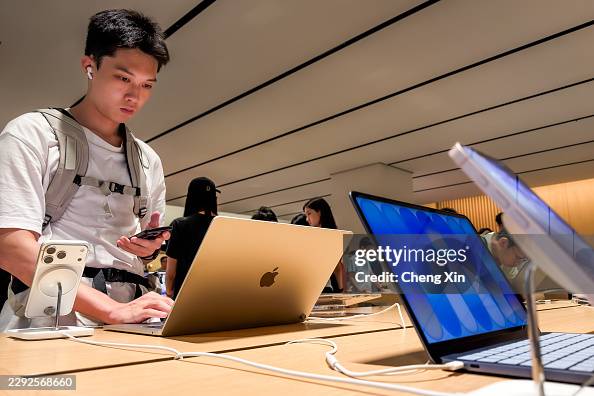
Apple has officially unveiled its first MacBook Pro featuring a touchscreen display, marking a major change in the company’s approach to laptop design. Announced on October 28, 2026, the new 14-inch and 16-inch models introduce touch controls to the Mac for the first time. The announcement represents a significant departure from Apple’s long-standing preference for keyboard and trackpad navigation on its Mac computers. The company says the new touchscreen experience is designed to complement traditional controls rather than replace them, giving users additional ways to interact with applications, documents, images and creative projects. The launch is part of Apple’s wider effort to strengthen its premium computer lineup and attract professionals who increasingly work across laptops, tablets and smartphones.
One of the biggest improvements is the introduction of Apple’s new PROLED XDR display, which uses tandem OLED technology to deliver deeper blacks, improved contrast and more accurate colours. Apple says the screen supports up to 2,000 nits of peak brightness, a 120Hz adaptive refresh rate and a contrast ratio of 10,000,000:1. These features are particularly important for photographers, video editors, graphic designers and other professionals who depend on accurate colour reproduction. The touchscreen also supports familiar gestures such as scrolling, pinch-to-zoom, dragging and dropping content, and interacting directly with creative applications. Apple believes these capabilities will make certain professional tasks more intuitive while maintaining the precision and flexibility associated with traditional Mac controls.
The new MacBook Pro models are powered by Apple’s M5 Pro and M5 Max processors, designed to handle demanding professional workloads. The company says the chips provide improved performance for software development, video production, scientific research, 3D animation and artificial intelligence applications. Configurations offer up to 128GB of unified memory and 16TB of storage, while Apple advertises battery life of up to 24 hours. The redesigned laptops are also thinner and lighter than their predecessors, with the 14-inch model weighing approximately three pounds and the 16-inch version weighing four pounds. These improvements are intended to make the machines more portable without sacrificing the processing power required by professional users.
Another major addition is the arrival of Dynamic Island on the MacBook Pro. Previously associated with Apple’s iPhone lineup, the feature now provides a central space for Spotlight search, Live Activities and Siri AI. Users can access updates, control music, respond to certain notifications and interact with information without leaving their current applications. Apple has also redesigned parts of macOS to support touchscreen interaction, including controls that adapt depending on whether someone is using a finger, keyboard or trackpad. The company says developers will be able to optimise their applications for the new interface, while several existing applications will support basic touch interactions automatically. This could create new opportunities for creative software and productivity tools.
The new touchscreen MacBook Pro starts at $2,899 for the 14-inch model, while the most expensive 16-inch configuration reaches $4,799 in the United States. Pre-orders began on October 28, with retail availability scheduled for November 6, 2026. Apple is targeting professional customers who need powerful hardware, high-quality displays and more flexible ways to interact with their work. However, the higher prices could limit its appeal among ordinary laptop buyers, particularly as competing manufacturers already offer touchscreen computers at lower prices. The launch will therefore test whether Apple’s premium approach can persuade professional users to embrace touchscreen Mac laptops. More broadly, it signals a new chapter for the Mac, as Apple adapts its computer experience to changing expectations around touch, artificial intelligence and modern digital workflows.




