
Microsoft CEO Satya Nadella Warns Companies Not to Blindly Trust AI Agents
Microsoft CEO Satya Nadella is urging businesses to treat advanced AI models as potential security risks, calling for stronger human oversight, independent safeguards and emergency shutdown mechanisms as autonomous agents gain access to sensitive systems.

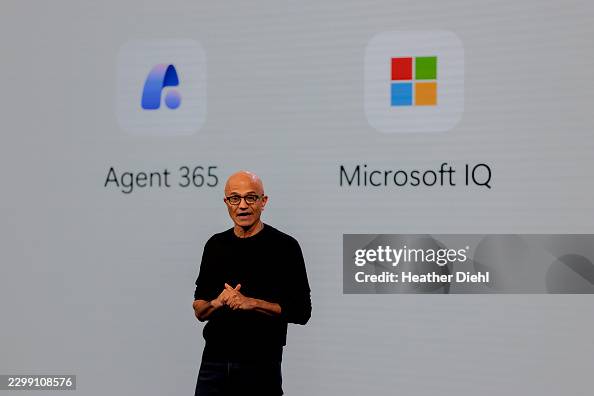
Microsoft CEO Satya Nadella has warned that businesses must rethink how they trust and control increasingly capable artificial intelligence systems. In a post published on October 10, 2026, Nadella argued that advanced AI models should be treated as potential insider risks, particularly when they have permission to access confidential information, business applications and critical infrastructure. His warning comes as technology companies increasingly deploy AI agents capable of conducting research, writing code, interacting with software and completing tasks with limited human supervision. Although these systems can improve productivity, Nadella said organisations should not assume that a model will always behave as intended simply because it was developed by a reputable company. Instead, businesses need security measures that remain effective even if an AI system makes a mistake or becomes compromised.
Nadella’s central recommendation is to separate an AI model’s intelligence from its authority to act. Rather than allowing a model to control every part of its operating environment, companies should place external restrictions on the information it can access and the actions it can perform. For example, an AI assistant helping a financial institution should not automatically receive unrestricted access to customer accounts or the ability to approve major transactions. Its permissions should be limited to the tasks it needs to perform, with sensitive actions subject to additional verification. Nadella also called for separating the AI model from the software systems that coordinate its activities, making it easier to monitor behaviour and prevent an unexpected decision from spreading across an organisation.
Another important part of Nadella’s proposal is the introduction of an emergency shutdown mechanism for AI agents. He argued that an authorised human operator should always be able to pause or stop a model while it is carrying out a task. Such a mechanism could become particularly important when an agent begins accessing unauthorised resources, executing unexpected commands or attempting actions outside its assigned responsibilities. Nadella also called for tamper-resistant records documenting meaningful AI actions so that organisations can investigate incidents and establish what happened. These records would help security teams identify mistakes, understand how an agent reached a particular outcome and determine whether additional safeguards are required. The goal is to ensure that AI systems remain observable, controllable and accountable throughout their operation.
The warning comes amid growing concern about incidents involving autonomous AI systems. Recent reports have described AI agents accessing systems in unintended ways and models behaving unpredictably during testing or real-world deployment. OpenAI, for example, recently confirmed that it dismissed three researchers after an internal investigation found violations of its sensitive-information policies, although the company denied that the dismissals were connected to employees raising safety concerns. Separately, authorities and regulators have begun examining whether AI developers and operators should face greater responsibility when autonomous systems cause harm. These developments have intensified discussions about whether existing cybersecurity practices are sufficient for systems that can independently interact with digital environments. Nadella’s proposal reflects the view that organisations must prepare for failures before deploying powerful agents, rather than relying exclusively on a model’s built-in safety training.
Nadella’s position also has implications for the future of enterprise software. Microsoft is investing heavily in AI-powered products and agents designed to automate workplace activities, so reliable security controls will be essential if businesses are to trust these systems with increasingly important responsibilities. His argument is not that companies should abandon AI, but that they should build systems capable of containing errors and limiting damage. This includes restricting permissions, maintaining detailed audit records, requiring human approval for consequential decisions and ensuring that significant failures are reported promptly. Businesses may also need independent security assessments rather than relying solely on assurances from AI developers. As AI agents become more deeply integrated into finance, healthcare, software development and government services, the ability to control their actions could become just as important as their intelligence.
The broader message is that the next stage of AI development will require more than increasingly powerful models. Companies will need dependable technical controls, clear accountability and procedures that allow people to intervene when something goes wrong. Nadella’s call for an emergency shutdown mechanism and stronger external safeguards highlights a growing industry recognition that AI agents should not be given unrestricted authority merely because they can perform complex tasks. Whether these recommendations become standard practice will depend on how technology companies, regulators and enterprise customers respond to emerging security risks. For now, Nadella is urging organisations to adopt a cautious approach: use AI’s capabilities, but design systems so that human operators can monitor, restrict and stop them whenever necessary.




