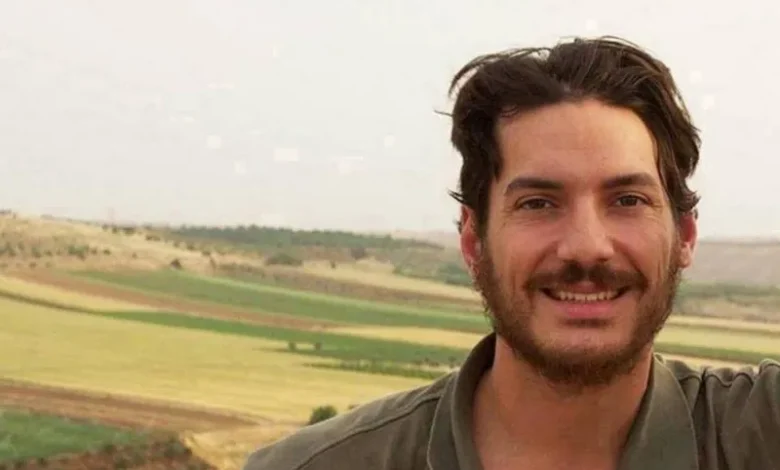
US journalist Austin Tice, who disappeared in Syria in 2012, was kidnapped in a calculated operation which was more than a month in the planning, the BBC can reveal.
A member of the group which detained Tice has also claimed the abduction was sanctioned by Syria’s leader at the time, President Bashar al-Assad.
Tice was seen getting into a car with a driver he knew and trusted. For years, many assumed they had stumbled upon a government checkpoint, and that the abduction of the journalist had been opportunistic.
But we have uncovered evidence that, in fact, his disappearance was anything but chance.
In a new BBC podcast: Where is Austin Tice? Series 3 of I’m Not A Monster Presents, we reveal the findings of a years-long investigation into what happened to Tice, who had been reporting on Syria’s civil war at the time.
His case has been followed closely by international media and cited by successive US presidents.
Georgetown University law student Tice, who had served as a US Marines captain, was last seen in a video – blindfolded and in apparent distress – posted more than a month after his capture.
As the regime fell 12 years later, tens of thousands of people emerged from the administration’s prisons. Tice was not one of them.
We obtained co-ordinates from an intelligence source for multiple locations US authorities suspected he could have been held at, and searched for him for more than a month, but found no sign of him.
A former Syrian commander has said Tice was executed. Others have questioned this account and no remains have been found.
But in the aftermath of the regime’s collapse, we did uncover secret Syrian intelligence files on Tice – hundreds of pages of internal records providing the first definitive proof that it was the regime that had held the journalist.
Two crucial questions remained unanswered, however: how exactly had Tice been taken in the first place? And, who was responsible for his abduction?
He says the abduction operation began when Tice’s driver – who multiple sources say had been passing the regime information for some time – told a senior NDF member that Tice was moving through rebel-held areas, reporting on the opposition.
Tice had pushed into areas most journalists deemed too dangerous and was writing front-page stories for the Washington Post. The Assad regime was cracking down on anyone highlighting its human rights abuses.
We have been told the NDF member Tice’s driver spoke to was Sakr Rustom – not just any NDF militia contact, but nephew of Bassam al-Hassan, one of Assad’s most trusted security figures and head of the NDF.
The information on Tice was passed up to Hassan, Abu Ali says, who is then said to have telephoned Assad.
“Bring him to us,” Assad replied, claims Abu Ali.
Abu Ali says he was subsequently called into Hassan’s office and told the president had approved the operation.
But Tice was not taken immediately. The driver, Abu Ali says, suggested that he and the NDF continue watching him, to uncover more about what he was doing.
“He trusts me,” Abu Ali recalls the driver saying.
Some time later, the driver reported back that Tice’s actions seemed suspicious, Abu Ali says.
Tice, as a trained marine, would sometimes share his military experience with rebel fighters – according to several people we spoke to – and would correct fighters on how they used their weapons.
To the men watching him, that behaviour made Tice look less like a journalist and more like someone from the CIA. The BBC has found no evidence to suggest this was the case, and a former senior US official responsible for part of Tice’s case has denied he was an intelligence officer.