
Audi Plans to Move A8 Production to Leipzig as German Auto Industry Faces Pressure
Audi is reportedly planning to shift production of its next-generation A8 luxury sedan from Neckarsulm to Leipzig, as Volkswagen Group restructures operations to reduce manufacturing costs and improve efficiency amid intensifying competition.

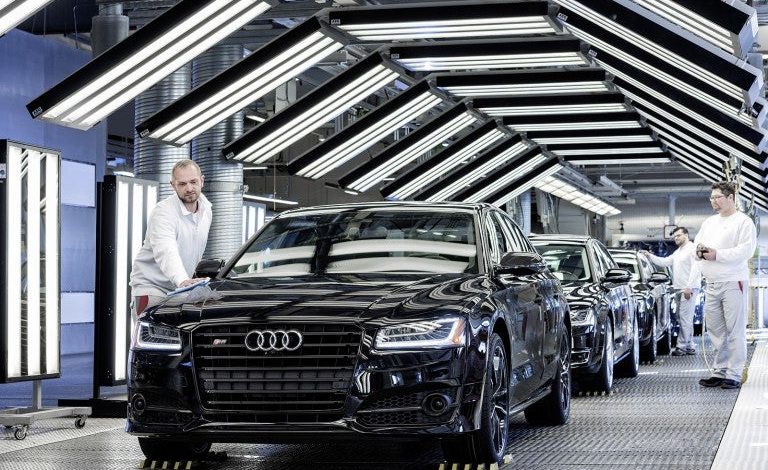
Audi is reportedly preparing to move production of its next-generation A8 luxury sedan from its traditional manufacturing location in Neckarsulm, Baden-Württemberg, to Leipzig, where Volkswagen Group subsidiary Porsche operates a major vehicle assembly plant. Reports published on October 8 and 9, 2026, indicate that the planned change could allow the German automaker to share production facilities and technologies across the group. The A8 has historically been manufactured in Neckarsulm, which also produces other Audi models, including the A5 and A6. Moving the flagship sedan to Leipzig would represent a significant change for the factory and form part of Volkswagen Group’s broader effort to streamline its manufacturing network. However, the reported plan has not yet been fully confirmed through a detailed official production announcement.
The proposed relocation comes as Audi faces pressure in the market for large luxury sedans. The A8 competes with premium vehicles such as the Mercedes-Benz S-Class and BMW 7 Series, but demand for traditional executive sedans has faced challenges as consumers increasingly favour SUVs and other vehicle categories. According to figures cited by automotive media, European sales of the Audi A8 and its performance-oriented S8 variant remained particularly low during the first eight months of 2026. The reported weakness in demand has raised questions about how Audi can maintain the model’s position while controlling development and manufacturing expenses. Moving production to an existing facility could help the company reduce costs and make better use of shared resources within Volkswagen Group.
Leipzig could offer Audi several manufacturing advantages because the Porsche facility already produces vehicles using advanced production systems and technologies that may be adaptable to future A8 models. Reports suggest that the next-generation sedan could share technical foundations with a future Porsche Panamera, potentially creating opportunities for greater platform and component sharing. Such cooperation could reduce the cost of developing a new luxury vehicle while allowing the brands to retain their individual designs and driving characteristics. However, the details of any shared platform, production schedule and investment programme remain subject to confirmation. Reports indicate that production of a successor at Leipzig may not begin before 2030, meaning the transition would form part of Audi’s longer-term strategy rather than an immediate relocation.
The reported plan has also raised concerns about the future of Audi’s Neckarsulm factory and its workforce. Approximately 15,000 people work at the site, making it an important employer in the surrounding region. During an employee meeting on October 8, Audi CEO Gernot Döllner reportedly stressed that the factory needed a sustainable industrial future, warning that its long history and technical expertise alone could not guarantee its long-term position. The concern is that the A5 and A6 production programmes currently assigned to Neckarsulm could end around 2033, leaving uncertainty over which vehicles would be manufactured there afterwards. Regional political and business leaders have reportedly begun working together to develop proposals that could help secure the site’s future and preserve employment.
The potential production shift reflects wider challenges facing Germany’s automotive industry, including rising costs, pressure from international competitors, US tariffs and the substantial investment required to develop electric vehicles and advanced automotive technologies. Volkswagen Group has been reviewing its production capacity and seeking ways to improve efficiency across its brands. Audi reported revenue of €29.18 billion in the first half of 2026, down from €32.57 billion in the same period a year earlier, although operating profit increased slightly to €1.12 billion. The company cited lower sales volumes and difficult market conditions, particularly in China and the United States, as factors affecting revenue. If the A8 relocation proceeds, it could help Volkswagen Group use its existing facilities more efficiently, but the longer-term impact on employment, regional manufacturing and Audi’s luxury-car strategy will depend on the final production.




