
Amazon Now Operates More Than One Million Robots as AI Automation Expands
Amazon CEO Andy Jassy reveals that the company has deployed more than one million robots across its fulfilment network, warning that automation will increasingly take over repetitive warehouse tasks currently performed by human workers.

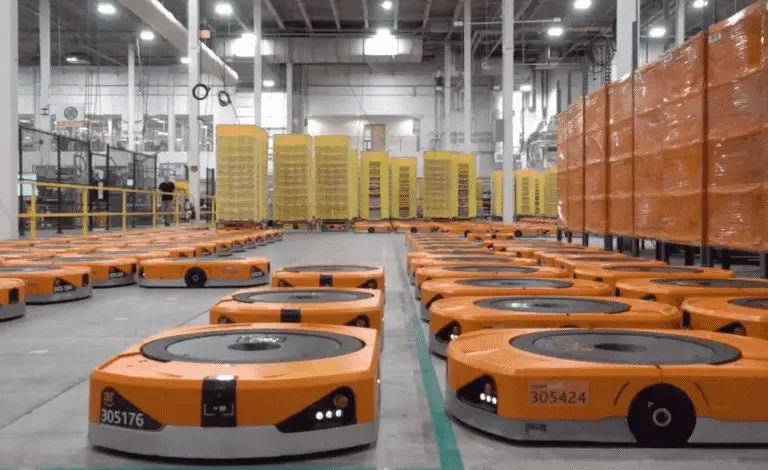
Amazon is accelerating its investment in robotics and artificial intelligence after CEO Andy Jassy revealed that the company now operates more than one million robots across its global fulfilment network. Speaking during Amazon’s third-quarter 2026 earnings call on October 29, Jassy explained that robotic systems are becoming increasingly important to the company’s operations, helping improve productivity, reduce operating costs and strengthen workplace safety. The announcement represents another major milestone in Amazon’s long-term automation strategy, which has developed significantly since the company acquired robotics company Kiva Systems in 2012. Over the years, Amazon has introduced different robotic technologies designed to move products, organise inventory, transport packages and assist warehouse employees with demanding physical tasks. According to Jassy, the company has already achieved substantial operational improvements through these systems, but its current deployment represents only an early stage of what it expects robotics to accomplish in the coming years. The announcement reinforces Amazon’s ambition to build a more automated logistics network capable of processing increasing numbers of customer orders efficiently.
One of the most significant aspects of Jassy’s announcement concerns the future of human employment in Amazon’s warehouses. The CEO acknowledged that many repetitive tasks currently performed by employees will increasingly be handled by robots as the technology becomes more advanced. He explained that Amazon’s fulfilment centres will continue to employ a significant number of people, but the nature of warehouse work is expected to change as automation expands. Activities involving repetitive lifting, sorting, transporting and handling products are among the areas where robotic systems could take on greater responsibility. Although Jassy did not announce a specific number of jobs that could be affected or provide a timetable for these changes, his comments highlight the potential employment consequences of large-scale automation. The development also comes amid wider concerns about artificial intelligence and robotics replacing traditional jobs across different industries. For warehouse employees, the expansion could mean fewer opportunities in certain repetitive roles, while creating greater demand for workers involved in robotics maintenance, technical operations, equipment supervision and system management.
Amazon also believes robotics can significantly improve workplace safety. Jassy said the company’s fulfilment network has recorded historically low safety figures, crediting robotics as one of the important contributors to this progress. Machines can take over certain physically demanding activities that expose workers to repetitive strain, heavy lifting and other workplace hazards. Amazon has also been developing robotic systems with more advanced movement and handling capabilities. During the earnings discussion, Chief Financial Officer Brian Olsavsky highlighted that the company had doubled the scale of some robotic-arm systems, including Cardinal and Sparrow, during 2026. These technologies are designed to improve how products are handled and processed inside fulfilment centres. Amazon is also investing in robotics foundation models, an area of AI research intended to help machines understand their surroundings, learn physical tasks and perform useful actions in real-world environments. The combination of advanced robotics and AI could eventually allow machines to perform a wider range of warehouse activities with greater flexibility than traditional automated equipment.
Beyond warehouse operations, Amazon is exploring opportunities to extend robotics into other parts of its delivery network. Jassy indicated that the company is considering technologies capable of assisting with the final stages of delivery, including activities close to customers’ homes. This stage, commonly called last-mile delivery, remains one of the most challenging and expensive parts of the logistics process. Robots that can safely transport or assist with deliveries could eventually help reduce operational costs and improve delivery efficiency. Amazon is also designing new fulfilment facilities, including same-day delivery centres, with heavier reliance on robotic technology. However, the company says it evaluates each robotic system according to several important factors: productivity, safety, operating costs and delivery speed. A technology must demonstrate comparable or better performance across these areas before Amazon considers deploying it at scale. This approach suggests that the company is not simply purchasing robots to replace human labour but is seeking technologies that can deliver measurable improvements throughout its supply chain.
Looking ahead, Jassy believes the impact of robotics on Amazon’s business will become significantly greater over the next five years. The company is continuing to experiment with different robotic designs, artificial intelligence systems and automated processes as it works towards building more efficient fulfilment operations. The announcement also places Amazon at the centre of a growing global competition among technology and logistics companies seeking to combine AI with physical machines. While automation could help businesses improve productivity, increase delivery speed and reduce certain operating expenses, it also raises important questions about employment, worker retraining and the future of traditional warehouse jobs. Amazon’s strategy demonstrates that the next phase of artificial intelligence will not be limited to chatbots, digital assistants and software applications. Increasingly, AI will control machines that interact directly with the physical world. With more than one million robots already operating across its fulfilment network, Amazon is positioning itself to become one of the leading examples of how intelligent automation could transform global commerce and logistics.




