
Trump Defends Nvidia CEO Jensen Huang Amid Chinese Spy Allegations
US President Donald Trump has expressed support for Nvidia CEO Jensen Huang following reports that a suspected Chinese intelligence operation targeted the technology executive, while promising a closer investigation into the allegations.

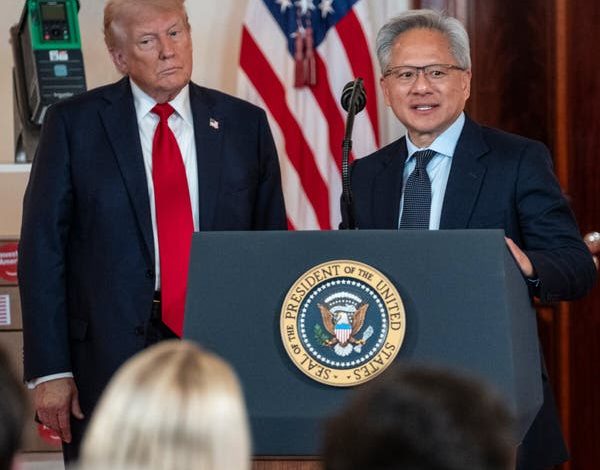
US President Donald Trump has publicly defended Nvidia chief executive Jensen Huang following reports that the billionaire technology leader may have been targeted by a suspected Chinese espionage operation. Speaking to reporters on November 1, 2026, Trump described Huang as a brilliant individual and said the United States would examine the allegations carefully. The controversy emerged after a report by The New York Times claimed that US intelligence officials had identified a Chinese executive connected to a Singapore-based data centre company as someone allegedly passing information to Beijing. Trump said he had considerable respect for Huang and hoped the Nvidia chief would be cleared of any wrongdoing. He also indicated that protecting important American technology leaders was a priority for his administration.
The allegations reportedly involve Alice Huang, also known as Huang Le, a former executive associated with Singapore-based Megaspeed International. According to the intelligence findings described in the newspaper report, she allegedly maintained contact with Jensen Huang and passed information to Chinese authorities. The investigation reportedly examined whether information obtained through business relationships could have provided Beijing with insights into Nvidia and the American artificial intelligence industry. However, the allegations concern suspected intelligence activities and have not established that Jensen Huang knowingly participated in espionage or provided confidential information to the Chinese government. The distinction is important because the reported investigation does not amount to a finding of wrongdoing against the Nvidia chief.
Trump was also asked whether Huang would continue serving as an adviser on American technology policy. The president indicated that he would like to retain the Nvidia chief in that role, describing him as someone he had always considered above board. However, Trump added that the situation was complicated and that his administration would investigate the matter before reaching further conclusions. Huang has maintained a close relationship with the president and has participated in discussions concerning artificial intelligence, semiconductor production and America’s technological competition with China. He was also among the business leaders who accompanied Trump during his May 2026 visit to Beijing, where the US president met Chinese President Xi Jinping.
Huang has separately defended Nvidia’s business relationship with Megaspeed, describing the company’s dealings with the Singapore-based firm as normal and not unusual. His comments were reported by Bloomberg following the publication of the espionage allegations. The Nvidia CEO has previously argued that American semiconductor companies should remain involved in the Chinese market rather than surrendering opportunities to domestic competitors. Nvidia’s advanced processors are important components in artificial intelligence data centres, and access to the Chinese market remains a sensitive issue because Washington has imposed restrictions on the export of certain advanced chips. Any investigation involving business relationships connected to semiconductor distribution could therefore attract significant attention from American national security officials.
China has rejected the espionage allegations, describing the report as groundless speculation and dismissing it as an attempt to damage the country’s reputation. The dispute comes amid wider tensions between Washington and Beijing over artificial intelligence, advanced semiconductors, technology exports and national security. Nvidia occupies a particularly important position in this competition because its processors power many of the world’s leading AI systems and data centres. The investigation could therefore have implications beyond the personal relationship between Trump and Huang, especially if it leads to additional scrutiny of companies involved in international semiconductor supply chains. For now, Trump has expressed confidence in Huang’s character while leaving the door open to further investigation. The outcome will depend on the evidence gathered by US authorities and whether officials identify any security violations connected to the reported activities.




