
Moonshot AI Releases Kimi K3.1 Pro With Improved Accuracy and Cybersecurity Safeguards
Chinese AI startup Moonshot has introduced Kimi K3.1 Pro, an upgraded open-weight model designed to improve reasoning accuracy while reducing certain cybersecurity capabilities ahead of the planned public release of its model weights.

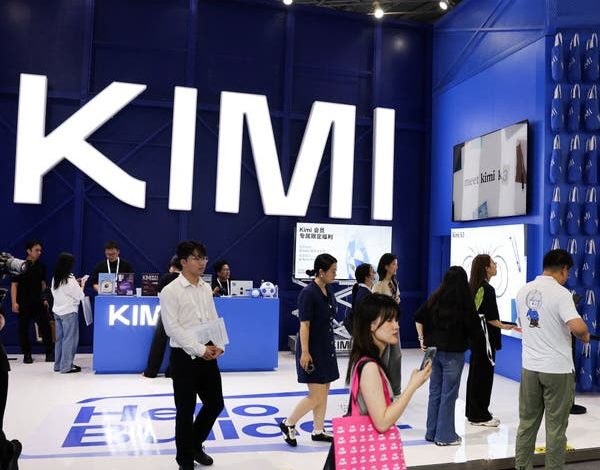
Chinese artificial intelligence startup Moonshot AI has unveiled Kimi K3.1 Pro, an upgraded version of its Kimi K3 model, as competition intensifies between Chinese AI developers and leading technology companies in the United States. Announced on October 24, 2026, the new model focuses on improving factual accuracy, advanced reasoning and the ability to handle complex, multi-step tasks. Moonshot says the system retains a one-million-token context window, allowing it to process large documents, extensive code repositories and substantial amounts of information within a single context. The launch represents another step in the company’s efforts to develop advanced AI systems that can compete with proprietary models while making powerful technology more accessible to developers. The announcement also comes as the industry faces growing concerns about the potential misuse of increasingly capable AI systems.
One of the main improvements claimed for Kimi K3.1 Pro is its reduction in factual errors. According to information published by Moonshot, the model achieved a claim-level hallucination rate of 8.3% on the company’s Kimi Hallu Bench Hard evaluation, compared with 23.4% for the previous Kimi K3 model. Hallucinations occur when an AI system produces information that appears convincing but is incorrect or unsupported. Reducing these errors is particularly important for applications involving software development, research, data analysis and professional knowledge work. However, benchmark results do not guarantee that the model will always provide accurate answers in everyday use. Independent evaluations across a wider range of tasks will be necessary to establish how consistently the improvements translate into real-world performance.
Kimi K3.1 Pro also retains the long-context capabilities that have helped distinguish Moonshot’s models from many competing systems. Its one-million-token context window is designed to support demanding coding assignments, large-scale document analysis and extended workflows in which the AI must maintain information across many stages. Such capabilities are increasingly important as developers build autonomous AI agents that can plan tasks, use software tools and work on projects with limited human intervention. Moonshot has positioned Kimi as a model for advanced reasoning and knowledge work rather than simply a chatbot for short questions and answers. The company’s broader strategy centres on open-weight AI, which allows developers to obtain model weights and potentially run or customise systems within their own infrastructure, subject to the applicable licence and release terms.
Cybersecurity has become another major focus of the release. Reuters reported on October 24 that Moonshot had reduced Kimi K3.1 Pro’s cyber-offensive capabilities by removing cyber-related data from its training corpus and reinforcement-learning environments while seeking to preserve its general coding abilities. In the company’s internal testing, the modified model scored 81.0% on a controlled benchmark involving the identification and exploitation of software vulnerabilities, compared with 90.5% for a similar version without those reductions. These results have not been independently verified. The decision reflects growing concern that powerful AI systems could lower the technical barriers to discovering and exploiting software weaknesses. At the same time, AI-assisted vulnerability analysis can help legitimate security teams identify flaws and strengthen digital infrastructure. Moonshot’s challenge is to support defensive applications while limiting capabilities that could facilitate cyberattacks.
The launch highlights the growing influence of Chinese AI developers in a market previously dominated by a smaller group of American technology companies. Moonshot released Kimi K3 in July 2026, describing it as a 2.8-trillion-parameter open-weight model with a one-million-token context window. Its development has attracted attention as Chinese companies continue to compete on model capability, accessibility and cost. However, releasing model weights creates a distinct safety challenge: once weights are widely distributed, developers have less ability to monitor how the model is used or impose restrictions centrally. Moonshot has said it intends to release the Kimi K3.1 Pro weights on November 4, 2026. If that schedule proceeds, the release will provide developers and independent researchers with an opportunity to examine the model more closely. Its long-term impact will depend on independent performance evaluations, adoption by developers and the effectiveness of safeguards against misuse.




