
Nvidia Has More Than $170 Billion at Stake in AI Cloud Companies
Nvidia has reportedly committed more than $170 billion to AI-focused cloud providers, increasing its exposure to a fast-growing industry while raising questions about debt, financial risk and the sustainability of the artificial intelligence boom.

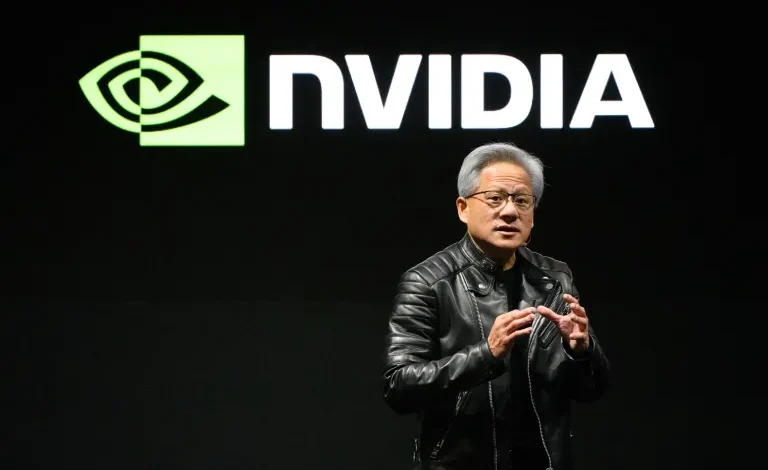
Nvidia has reportedly put more than $170 billion at stake in specialised AI cloud companies, highlighting how far the chipmaker has expanded beyond manufacturing processors into financing the infrastructure that powers artificial intelligence. According to a report published by The Information on October 21, 2026, Nvidia has developed substantial financial relationships with so-called neocloud providers, which purchase large quantities of its graphics processing units (GPUs) and rent computing capacity to businesses developing and operating AI systems. These companies have become increasingly important as demand for advanced computing infrastructure grows worldwide. However, the scale of Nvidia’s reported commitments has drawn attention to the financial risks associated with supporting companies whose success depends heavily on continued demand for AI computing services.
Neocloud companies differ from traditional cloud providers because they focus heavily on supplying specialised computing resources for AI training and inference. Instead of building broad cloud platforms covering hundreds of services, many concentrate on providing access to powerful GPU clusters that developers can rent to train models, operate AI agents and process large amounts of information. Companies in this market include CoreWeave and Nebius, alongside several emerging infrastructure providers. Their business models depend on securing chips, constructing data centres, obtaining reliable electricity supplies and signing customers willing to pay for computing capacity. Nvidia benefits when these providers purchase its hardware, while the cloud companies depend on that hardware to generate revenue from their own customers.
The reported commitments also highlight Nvidia’s increasingly influential role in financing the AI ecosystem. In August 2026, the company announced partnerships with Apollo, BlackRock, Blackstone, Brookfield, Goldman Sachs and KKR to establish financing platforms intended to mobilise more than $500 billion in third-party capital for AI infrastructure over time. Nvidia said the initiative would help customers access computing capacity and accelerate data-centre construction. Separately, Reuters reported in August that Nvidia had agreed to guarantee up to $105 billion to support OpenAI’s planned long-term data-centre leasing arrangements in Ohio. These arrangements illustrate how financing, chip supply and cloud infrastructure are becoming closely connected as technology companies compete to expand their AI capabilities.
Despite the growth potential, Nvidia’s exposure has raised concerns about the sustainability of the industry’s financial structure. Neocloud providers often require substantial borrowing to acquire expensive chips and build infrastructure before generating enough revenue to cover their costs. If demand for AI computing continues to increase, these investments could produce significant returns. However, if customers reduce their spending, new AI models require less computing power than expected, or cloud providers struggle to secure financing, some companies could face difficulties meeting their financial obligations. Investors are particularly attentive to arrangements in which chip manufacturers invest in or financially support customers who subsequently purchase their products, because such relationships can make it harder to determine how much demand is driven by independent customer spending.
Nvidia CEO Jensen Huang has defended the neocloud sector, describing demand for its services as exceptionally strong and arguing that access to working capital is a major obstacle preventing providers from expanding quickly enough. The company’s position reflects its confidence that AI infrastructure will remain essential as businesses develop increasingly capable models and automated systems. Nevertheless, the reported $170 billion exposure places greater importance on the financial health of Nvidia’s partners and their ability to turn computing capacity into sustainable revenue. The figure should not automatically be interpreted as a realised loss or a single cash investment; it refers to reported financial exposure, and the specific terms and counterparties have not been fully detailed in publicly available reporting. Ultimately, Nvidia’s long-term position will depend not only on selling advanced chips but also on whether the wider AI infrastructure market generates enough economic value to support the enormous investments being made today.




