Amazon Buys Billions in Nvidia AI Racks Despite Data Centre Power Shortages
Amazon is reportedly preparing to receive billions of dollars’ worth of Nvidia AI server racks before some of its data centres have enough electricity to operate them, highlighting the growing infrastructure challenges behind the global artificial intelligence boom.

Amazon is expanding its investment in artificial intelligence infrastructure, but a new report suggests the company is acquiring advanced Nvidia hardware faster than some facilities can put it to use. According to Business Insider, Amazon Web Services (AWS) established an internal programme known as Early Rack Receipt to accept Nvidia GB300 server racks at US facilities before their final deployment. Internal emails reportedly indicated that Amazon expected to receive approximately $5 billion worth of server racks, followed by around $3 billion in additional hardware deliveries each month for the foreseeable future. The report, published on October 20, 2026, highlights the pressure on major technology companies to secure advanced AI computing equipment amid intense competition for chips and data centre capacity.
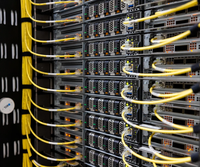
The hardware involved includes Nvidia’s GB300 systems, which are designed to support demanding AI workloads such as training large models and running AI agents. These systems require substantial electricity, specialised cooling equipment and suitable data centre infrastructure. However, some AWS locations reportedly lack sufficient power capacity to activate all the incoming equipment. As a result, certain server racks are being held in intermediary warehouses while Amazon works towards their eventual deployment. The situation has been described as a case of “dark GPUs”, referring to computing hardware that has been purchased or delivered but cannot yet be used productively. The report does not establish that every incoming rack is idle; rather, it indicates that power constraints are affecting deployment at some locations.
The development illustrates a major challenge facing the AI industry: access to advanced chips is no longer the only factor determining how quickly companies can expand computing capacity. Data centres must also secure electricity connections, cooling systems, physical space and other supporting infrastructure before their servers can operate. These requirements can take considerable time to complete, particularly as technology companies compete to build facilities capable of supporting increasingly powerful AI systems. Amazon’s reported decision to accept equipment early appears intended to secure hardware supplies and reduce the risk of losing access to scarce computing equipment. However, purchasing systems before the necessary infrastructure is ready can leave expensive assets underused while the company continues paying for construction and other operational requirements.
The scale of Amazon’s investment also raises questions about cash flow and the financial risks associated with the AI boom. Business Insider reported that the company expects to spend approximately $220 billion on capital expenditures in 2026, reflecting its substantial investments in AI computing, data centres and other infrastructure. Amazon’s strategy comes as major technology companies race to expand their capacity to meet demand from businesses developing AI models, autonomous agents and cloud-based applications. Chief Executive Andy Jassy has described the opportunity presented by AI as exceptionally significant, while Amazon maintains that receiving equipment ahead of final deployment is a deliberate procurement strategy. Nevertheless, if power shortages delay the use of expensive servers, the gap between infrastructure spending and the revenue generated by that equipment could become an important issue for investors.
The situation also highlights the close relationship between Amazon and Nvidia as demand for AI computing continues to grow. In August 2026, AWS and Nvidia announced plans to deploy an additional two million Nvidia GPUs across AWS infrastructure, alongside broader cooperation involving networking, CPUs, open AI models and robotics. That agreement demonstrates the scale of the companies’ long-term collaboration, although it does not mean all the planned GPUs have already been installed or activated. Looking ahead, Amazon will need to align hardware deliveries with the availability of electricity and operational data centre capacity. The broader lesson for the technology industry is that the next stage of AI expansion will depend not only on developing faster chips and more capable models, but also on securing the energy and infrastructure required to run them economically.