OpenAI’s Sam Altman Questions Why Laptops Need So Much Memory
OpenAI CEO Sam Altman has argued that scarce computer memory should be concentrated in AI data centres rather than personal computers, sparking debate over rising hardware prices and the future of local computing.

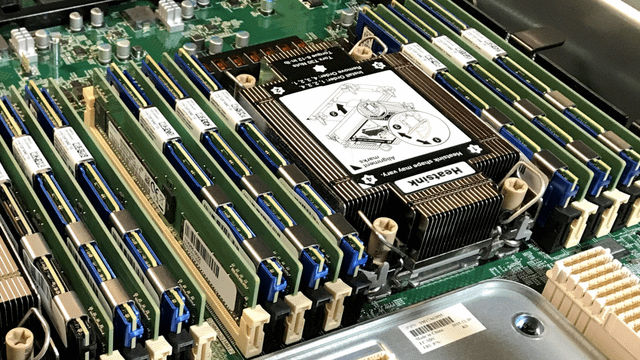
OpenAI CEO Sam Altman has sparked debate across the technology industry after questioning why personal computers need to contain large amounts of memory when much of that capacity remains unused. Speaking during an interview on the Cheeky Pint podcast, published on October 29, 2026, Altman argued that the world’s limited supply of dynamic random-access memory (DRAM) could be used more efficiently if more of it were concentrated in large data centres. According to him, memory installed in personal computers may remain idle for much of the day, while data-centre infrastructure can operate continuously and serve multiple users. His comments come as the rapid expansion of artificial intelligence infrastructure increases demand for memory chips and places additional pressure on the global semiconductor supply chain.
Altman specifically questioned the practice of giving individual computer users substantial amounts of memory when their machines may not use the available capacity consistently. He suggested that personal computers use their memory only a small percentage of the time, making centralised computing a potentially more efficient way to allocate limited resources. Under this approach, users could depend more heavily on cloud-based systems that provide computing power and memory whenever required. Large AI data centres are designed to handle continuous workloads, allowing their hardware resources to be shared across numerous applications and customers. Altman’s argument reflects OpenAI’s broader interest in cloud computing, where the company operates large-scale infrastructure to train and run its AI models.
The comments have attracted criticism from computer enthusiasts, hardware professionals and supporters of locally operated AI systems. Many argue that personal computers need sufficient memory to run demanding applications, games, professional software and artificial intelligence models without depending on an internet connection. Local computing also provides users with greater control over their files, privacy and software environments. Open-source AI models have increased interest in running powerful systems directly on personal computers, allowing developers and researchers to experiment without relying entirely on commercial cloud services. Critics therefore believe that shifting more computing resources into data centres could increase dependence on major technology companies and make individuals more reliant on subscription-based services.
Another major concern is the effect of AI infrastructure spending on the cost and availability of computer memory. Technology companies are purchasing enormous quantities of advanced memory to support AI accelerators, servers and large-scale computing systems. This competition has contributed to supply constraints and higher prices, affecting manufacturers of laptops, smartphones and other electronic devices. Memory producers such as Micron, Samsung and SK Hynix are central to the market because their products are used across both consumer electronics and data-centre infrastructure. Altman’s remarks have also drawn attention to the fact that OpenAI is among the companies benefiting from expanded data-centre capacity, making his argument particularly relevant to the ongoing debate about how AI expansion affects ordinary computer users.
Altman’s position raises an important question about the future of personal computing: should more computing power remain in devices owned by individuals, or should it increasingly be provided through shared cloud infrastructure? Centralised systems can improve resource utilisation and make powerful AI services accessible without requiring expensive hardware. However, they also introduce concerns involving internet connectivity, data privacy, service costs, outages and dependence on technology providers. Altman has expressed a preference for using scarce memory more intensively in data centres, but his comments do not represent an announced plan to eliminate memory from personal computers or a confirmed OpenAI hardware policy. The discussion instead highlights a growing disagreement over how the world’s limited semiconductor resources should be distributed as artificial intelligence becomes more demanding.