Alphabet Expects Google TPU Sales to Surge in 2027 as AI Chip Demand Grows
Google’s parent company, Alphabet, expects a significant increase in external sales of its artificial intelligence chips in 2027, positioning its Tensor Processing Units as a growing competitor in the AI infrastructure market dominated by Nvidia.

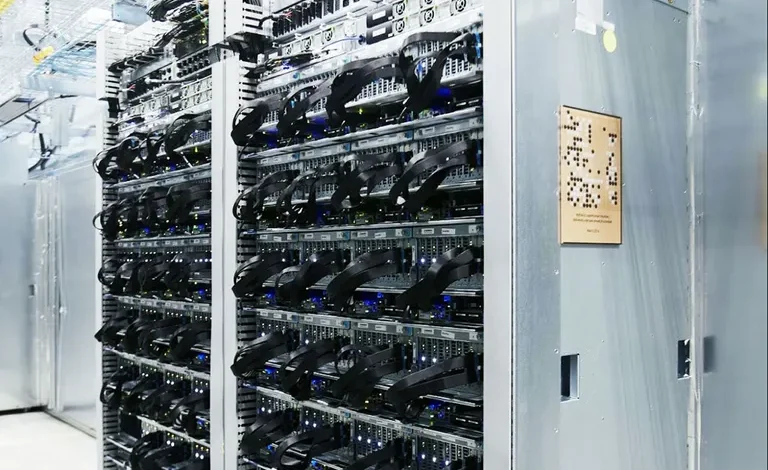
Alphabet is preparing for a major expansion of its artificial intelligence chip business, with Google Cloud executives expecting sales of its Tensor Processing Units (TPUs) to increase significantly in 2027. During its third-quarter 2026 earnings discussions, the company said demand for its custom-designed AI processors was growing among technology companies, financial institutions and other enterprise customers. Google Cloud CEO Thomas Kurian indicated that TPU system sales would continue scaling in the final quarter of 2026 before experiencing a meaningful revenue increase in 2027. The development marks an important shift for Google, which originally developed TPUs primarily to power its own artificial intelligence systems, but is now increasingly making the technology available to external customers.
Google’s TPUs are specialised processors designed to handle the demanding calculations required for training and running artificial intelligence models. Unlike general-purpose processors, they are built specifically to accelerate machine-learning workloads, including large-scale model training, inference and the multi-step operations used by AI agents. Google has developed the technology over more than a decade and is now expanding its eighth-generation TPU portfolio, which includes separate architectures for training and inference. The company says its latest systems offer substantial improvements in performance and efficiency compared with previous generations. By making these processors available beyond its own cloud infrastructure, Google aims to attract AI developers and organisations looking for alternatives to Nvidia’s widely used graphics processing units.
Several major customers and partnerships are already contributing to the expansion. Anthropic has secured access to Google’s TPU infrastructure through a substantial agreement, while Google has also announced partnerships that will make its processors available through Oracle Cloud Infrastructure. The Oracle arrangement, announced on October 27, will allow customers to access Google TPUs through a major cloud platform outside Google’s own ecosystem, with availability expected to begin in 2027. Google executives have also identified companies in financial services, AI research and enterprise computing as potential customers. The growing distribution network could make TPUs more accessible to organisations that previously relied heavily on Nvidia hardware for their AI operations.
However, expanding the chip business comes with significant financial and operational challenges. Alphabet must purchase hardware, build inventory and prepare complete systems before customers receive their equipment and make payments. Chief Financial Officer Anat Ashkenazi explained that this process is affecting the company’s cash flow because money is spent on inventory before the corresponding revenue is recognised. Reuters reported that Alphabet’s shares fell nearly 11% on October 29 amid investor concerns about its increasing AI infrastructure spending and cash requirements. The company has also indicated that its capital expenditure will increase substantially in 2027. Although TPU sales are contributing to Google Cloud’s growth, Alphabet does not separately disclose the revenue or profit margins generated by the chip business.
The expansion of Google’s TPU business could create stronger competition for Nvidia, which currently dominates the market for advanced AI processors. By offering its own hardware alongside cloud computing, networking, storage and software, Google is attempting to provide customers with a complete AI infrastructure package rather than simply selling individual chips. Analysts have projected that external TPU hardware sales could reach tens of billions of dollars annually, although these figures remain forecasts rather than confirmed company guidance. If Google successfully expands production and secures more long-term customers, its custom processors could become an important source of revenue and strengthen its position in the global AI industry. The expected 2027 sales increase will therefore be closely watched by investors, semiconductor manufacturers and technology companies evaluating alternatives to Nvidia’s hardware.