
TSMC Considers Entering Memory Chip Market Following Nvidia Request
The Taiwanese semiconductor giant is exploring plans to manufacture advanced 3D DRAM chips as artificial intelligence demand intensifies the global memory shortage.

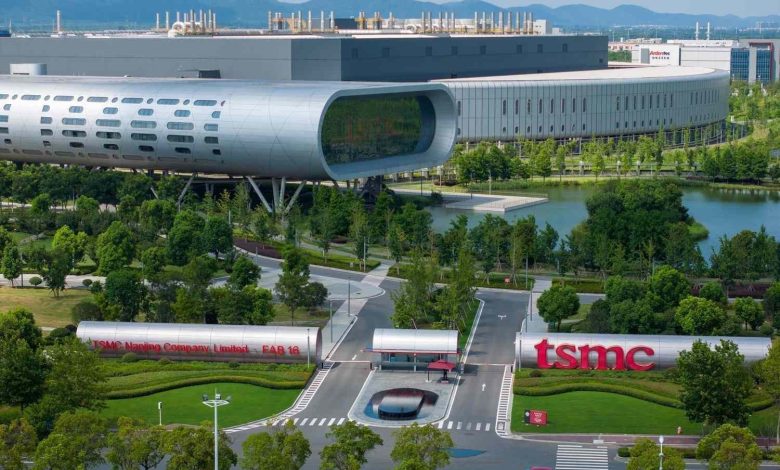
Taiwan Semiconductor Manufacturing Company (TSMC) is considering expanding into advanced memory chip production following a request from Nvidia, its biggest customer. According to a report by The Information published on November 6, 2026, the world’s largest contract chipmaker has started developing plans to manufacture a specialised memory technology known as 3D DRAM. The potential move would represent a major expansion beyond TSMC’s traditional focus on manufacturing processors and other semiconductor components for technology companies.
The proposed 3D DRAM technology stacks memory cells vertically rather than arranging them in a single horizontal layer, potentially allowing greater storage capacity within a smaller physical space. The development comes as artificial intelligence companies face increasing difficulties securing sufficient memory chips for advanced processors and data centre systems. Nvidia and Apple are among the major technology companies reportedly seeking additional memory supplies as shortages drive up prices and increase pressure on hardware manufacturers.
To establish production capacity, TSMC is reportedly considering building new manufacturing facilities or acquiring an existing semiconductor plant and converting it for memory production. The initiative is being led by Hsu Kuo-chin, a company vice president responsible for advanced packaging operations who previously managed Micron’s regional business. However, TSMC has not announced a production schedule, investment amount or manufacturing target. The company also stated that its core business remains dedicated integrated circuit foundry services, while Nvidia had not immediately responded to requests for comment.
If the plan moves forward, TSMC would enter a highly competitive market dominated by Samsung Electronics, SK Hynix and Micron Technology. The expansion could strengthen its position in the AI hardware supply chain, but memory manufacturing carries significant financial and technological risks because the industry is vulnerable to changing demand and supply cycles. TSMC must also consider its existing partnership with SK Hynix on advanced memory packaging technology. Investors will be watching whether the company turns its reported plans into a concrete manufacturing strategy as the global race for AI infrastructure continues.




