IMF Raises 2026 Global Growth Forecast to 3.1% Amid AI Boom and Rising Debt
The International Monetary Fund has upgraded its 2026 global economic growth forecast from 3.0% to 3.1%, citing strong artificial intelligence investment while warning that rising debt, expensive energy and geopolitical conflicts threaten the outlook.

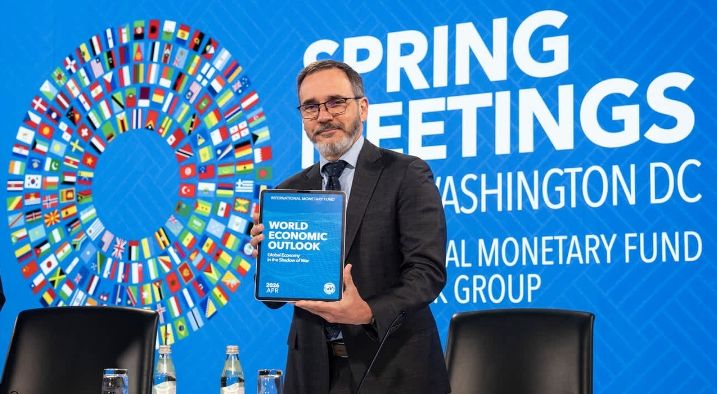
The International Monetary Fund (IMF) has slightly raised its forecast for global economic growth in 2026, predicting that the world economy will expand by 3.1%, compared with the 3.0% projected in July. The updated forecast was released on October 13, 2026, as global economic and financial leaders gathered in Bangkok for the IMF and World Bank annual meetings. Although the revision indicates that the global economy has remained more resilient than previously expected, the projected growth rate is still below the 3.5% recorded in 2025. The IMF expects growth to improve to 3.4% in 2027, but warns that the outlook remains uncertain because of geopolitical tensions, elevated energy prices and financial vulnerabilities. The latest assessment suggests that the global economy is continuing to expand, although the benefits are not being shared evenly among countries.
One of the major factors supporting the revised forecast is the rapid expansion of investment in artificial intelligence. Companies worldwide are spending heavily on AI infrastructure, including advanced semiconductors, data centres, computing equipment and cloud services. This investment is supporting economic activity in countries involved in manufacturing and supplying technology products. The IMF identifies the AI boom as an important source of economic momentum, particularly for advanced economies and countries integrated into global technology supply chains. However, the organisation has cautioned that the benefits remain concentrated in a relatively small number of economies. According to the latest outlook, just 32 countries are expected to account for 95% of global economic growth, compared with 54 countries in an earlier assessment. This concentration raises concerns that many developing economies could struggle to benefit fully from the expanding AI industry.
Despite the positive contribution from technology investment, rising energy costs remain a major threat to economic stability. The IMF’s latest assessment reflects an increasingly difficult global environment in which oil prices have remained elevated amid conflict in the Middle East and disruptions to energy supplies. Higher fuel and transportation costs can increase the price of food, manufactured goods and essential services, placing additional pressure on households and businesses. Energy-importing countries are particularly vulnerable because they must spend more on imported fuel, potentially weakening their currencies and increasing inflationary pressure. The IMF has warned that without measures to cushion the impact of the energy shock, global growth could have fallen to around 2.5% in 2026. The organisation also cautions that a prolonged conflict or a further increase in oil prices could weaken economic activity while making it more difficult for central banks to control inflation.
The IMF has also highlighted the growing risks associated with public debt and financial markets. Governments in several major economies are carrying substantial debt burdens, limiting their ability to respond to future economic shocks. At the same time, investment in AI companies and infrastructure has increased expectations about future productivity and profits. If those expectations prove overly optimistic, financial markets could experience sharp corrections that affect businesses, investors and the wider economy. The IMF has therefore urged governments to adopt credible fiscal policies, strengthen public finances and rebuild financial buffers. It has also emphasised the need to manage the economic effects of AI carefully, as the technology could boost productivity but may also create labour-market disruption, cybersecurity challenges and uncertainty about the returns on major investments. These risks do not mean that an economic downturn is inevitable, but they demonstrate why the organisation remains cautious despite raising its growth forecast.
Among the major economies, the IMF expects the United States to grow by 2.3% in 2026, while China is projected to expand by 4.5% and India by 7.0%. India’s forecast would make it the fastest-growing major economy in the current assessment. However, the outlook varies considerably across regions, with some countries benefiting from technology investment while others face higher energy costs, conflict-related disruption and rising borrowing expenses. Several economies in the Middle East are experiencing particularly severe pressure because of the effects of regional conflict on energy production and exports. For developing countries, including those in Africa, the combination of expensive imports, limited fiscal resources and uneven access to AI investment could make sustainable growth more difficult to achieve. The IMF’s latest forecast therefore presents a mixed picture: global economic activity remains resilient, but the risks are increasing and the gains are becoming more concentrated. Governments will need to strengthen economic policies, invest in productive capacity and prepare for further shocks to support more balanced growth in the years ahead.