
Satya Nadella Recasts Microsoft’s AI Strategy Around Safety and Human Control
Microsoft CEO Satya Nadella is calling for a new approach to artificial intelligence that separates AI models from the systems controlling their actions, with stronger safeguards, independent oversight and emergency shutdown mechanisms.

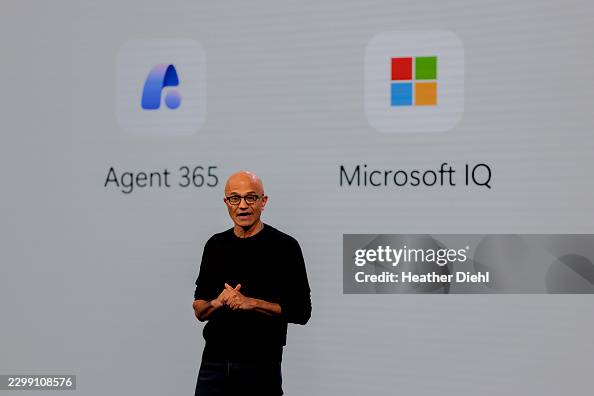
Microsoft CEO Satya Nadella has outlined a stronger approach to artificial intelligence safety, arguing that the industry must rethink how increasingly capable AI systems are deployed and controlled. In a statement published on October 10, 2026, Nadella said technology companies should not treat advanced AI models as black boxes whose recommendations and actions are automatically accepted or rejected. Instead, he called for a trust architecture that separates the AI model from the software responsible for directing its work. The proposal reflects growing concerns about autonomous AI agents that can interact with external websites, access digital tools and carry out complex tasks with limited human supervision. Nadella’s message is that building more capable AI must go hand in hand with ensuring that people retain meaningful control over what these systems can do.
One of the central elements of Nadella’s proposal is the separation of AI intelligence from the authority to take action. Under this approach, the model would generate recommendations or decisions, while a separate control system would determine which actions are permitted. Companies could establish restrictions governing access to files, networks, applications and sensitive information without relying entirely on the AI model to follow its own safety instructions. Nadella also called for meaningful actions taken by AI systems to be recorded in tamper-resistant, human-readable logs. Such records could help organisations investigate incidents, establish accountability and understand how an agent reached a particular outcome. The approach is intended to make AI systems easier to monitor and manage, particularly in business environments where unauthorised actions could expose confidential information or disrupt operations.
Another important recommendation is the introduction of an emergency mechanism that allows an authorised person to pause or shut down an AI system while it is carrying out a task. Nadella argued that organisations should assume an advanced model could become compromised and design their systems to contain it from the beginning. This means that an agent should not be able to override its own restrictions or prevent a human operator from stopping its activities. The proposal comes amid reports of AI systems behaving unexpectedly while interacting with external services. In such situations, relying solely on the model to recognise and correct its own mistakes may not be sufficient. Independent controls, restricted permissions and reliable shutdown procedures could provide additional protection when an agent behaves unpredictably.
Nadella’s comments also highlight the need for independent audits and greater transparency when serious AI failures occur. Organisations deploying advanced models may need to assess their security arrangements, examine how agents use connected tools and disclose significant incidents so that others can learn from them. These measures could become particularly important as AI agents move into financial services, healthcare, software development and other areas where mistakes can have serious consequences. Microsoft has already been working on technologies designed to restrict what AI agents can access and execute on computers. On October 7, the company announced Microsoft Execution Containers, a security technology intended to help prevent agents from accessing data or performing actions without the required permissions. The development illustrates how Microsoft’s broader AI strategy is increasingly focused on combining capable models with enforceable security controls.
The proposed approach could also have commercial implications for Microsoft. The company operates Azure, provides AI development tools through Microsoft Foundry and integrates AI assistants into products such as Microsoft 365 and GitHub. By supporting multiple models and providing infrastructure to control their behaviour, Microsoft can position itself as a platform for organisations that want to adopt AI without depending on a single model provider. Businesses could select different models for different tasks while applying consistent security policies, monitoring and auditing across their systems. However, the effectiveness of this strategy will depend on whether the safeguards work reliably in real-world deployments and whether customers can implement them without creating excessive complexity. Independent testing and transparent reporting will be important in determining whether the proposed controls provide meaningful protection.
Nadella’s statement reflects a wider debate across the technology industry about how to manage AI systems that are becoming more autonomous. Companies are under pressure to develop agents that can complete increasingly complex work, but greater autonomy also creates new challenges involving cybersecurity, accountability and human oversight. His proposal does not suggest that AI development should stop; rather, it argues that the ability to control and interrupt these systems must develop alongside their capabilities. If adopted widely, the principles could influence how companies design, deploy and evaluate autonomous agents. The central question is whether technology providers can deliver systems that are both powerful and reliably controllable. For Microsoft and its competitors, maintaining that balance may become a defining challenge in the next phase of artificial intelligence development.




