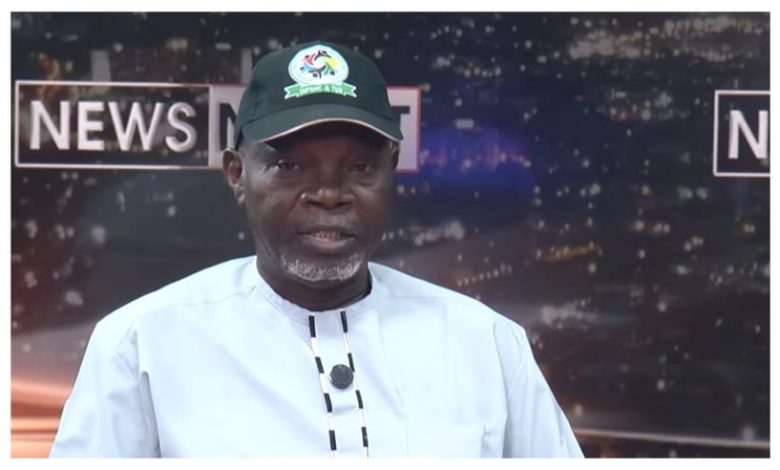
National Secretary of the Joint National Public Service Negotiating Council, JNPSNC, Comrade Gbenga Olowoyo has restated organised labour’s demand for a N500,000 minimum wage, pointing out that the figure is a true reflection of the financial burden on Nigerian workers in he face of rising cost of living.
Olowoyo said labour remained committed to the proposed wage but was open to reasonable negotiations with the Federal Government to reach an agreement that would improve workers’ welfare.
He spoke during an interview on Arise News on Tuesday, following a meeting between organised labour and the Federal Government that lasted more than six hours to discuss workers’ welfare and measures to cushion the impact of rising petrol prices.
He okayed the Federal Government’s agreement to provide workers with N70,000 transport support monthly for six months, beginning in November, describing the intervention as a positive outcome of negotiations.
According to him, the agreement showed the government’s willingness to address workers’ concerns, adding that labour expected the government to honour its commitment and implement the intervention as agreed.
“I think with the recent development that happened today, the negotiation lasted over six hours, and with the outcome of the meeting, I think it is a good omen,” Olowoyo said.
He said that the N70,000 intervention should serve as initial relief while talks on a new minimum wage continued.
“The template of N500,000 is still subsisting. And at the same time, if government is able to dance around N500,000, we would be alright to support the President. So I want to believe that, like I told you, we are not going to be rigid, but at the same time, we’ll be reasonable,” he said.
The JNPSNC scribe clarified that the proposed minimum wage was prompted by the responsibilities workers carry, comprising providing for their immediate families, paying school fees and meeting other essential household expenses.
He emphasized that although organised labour was not ready to drop its demand, it was willing to negotiate with the government to come at an acceptable figure to both parties.
Olowoyo also expressed confidence that the agreement reached with the government would lead to further discussions, particularly on the establishment of a tripartite committee to negotiate a new minimum wage, one of labour’s key demands.
He stated that the government’s decision to enter into an agreement with organised labour was an indication of its commitment, adding that labour expected the process to progress towards a lasting resolution of the minimum wage issue.
He said the agreement would benefit workers beyond the unions directly involved in the negotiations, as the Nigeria Labour Congress, NLC, has more than 40 affiliate unions.
He clarified that the negotiations originally involved the Joint National Public Service Negotiating Council and eight unions before the NLC joined the process, broadening the scope of representation..
He said he was confident that the government would implement the N70,000 monthly transport intervention, describing the signed agreement as a commitment that both parties were expected to respect.
“We know government is going to implement it because that is commitment already,” he said.