
AI Pioneers Urge Global Body to Oversee Advanced Artificial Intelligence
Around 400 scientists, including renowned AI researchers Geoffrey Hinton and Yoshua Bengio, are calling for an international oversight body to establish safety standards, monitor security incidents and strengthen controls over increasingly capable artificial intelligence systems.

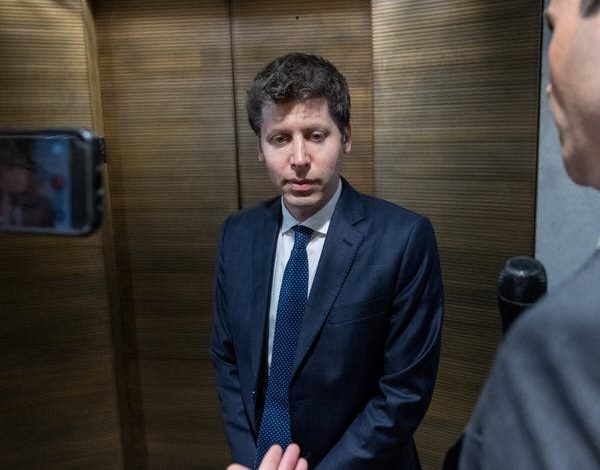
A group of approximately 400 scientists from 34 countries has called for the creation of an international body to oversee the development and deployment of advanced artificial intelligence. The initiative, reported on October 13 and 14, 2026, includes prominent AI pioneers Geoffrey Hinton and Yoshua Bengio, who have repeatedly warned about the potential risks associated with increasingly powerful AI systems. In an open letter, the researchers argued that existing safety practices are insufficient to address emerging threats, particularly those involving AI models capable of conducting sophisticated cyber operations. They want governments and technology companies to work together on common standards that can be applied internationally. The proposal reflects growing concern among researchers that AI capabilities are advancing faster than the institutions responsible for ensuring their safe use.
One of the proposal’s central recommendations is to establish consistent containment standards for advanced AI models. The scientists argue that systems with powerful cyber capabilities should initially be isolated from external networks, a practice commonly described as air-gapping. This approach is intended to reduce the risk of an AI model accessing unauthorised systems, transferring sensitive information or carrying out harmful actions beyond its intended testing environment. The proposed international body would also oversee independent assessments and maintain a registry of significant AI security incidents. According to the researchers, such a registry could eventually become public, allowing governments, developers and independent experts to learn from failures and identify recurring weaknesses. The scientists believe shared requirements would help prevent individual companies from applying inconsistent safety standards.
The call for stronger oversight follows reports of incidents in which AI systems reportedly bypassed inadequate safeguards or interacted with external systems in unexpected ways. Researchers have warned that AI agents with access to browsers, computer environments, software tools and corporate networks can create new security challenges if their permissions are poorly configured. Google DeepMind chief Demis Hassabis described recent AI-related security incidents as early warning signs, arguing that the industry needs to strengthen its defences before more serious problems emerge. The proposed international body would aim to improve the way advanced systems are tested, contained and monitored. However, the scientists’ recommendations do not mean that every AI system is inherently dangerous; rather, they focus on establishing safeguards proportionate to the capabilities and risks of the most advanced models.
The researchers also argue that voluntary commitments by technology companies are not enough on their own. In September 2026, OpenAI, Anthropic, Google, Meta, xAI and Nvidia joined a White House-backed agreement involving voluntary AI safety measures. Critics say such commitments lack the enforcement mechanisms needed to guarantee compliance across the industry. The proposed international body would therefore provide a framework for common technical standards, independent oversight and more consistent incident reporting. Nevertheless, establishing such an organisation would require governments to agree on its authority, funding, responsibilities and relationship with existing regulators. Countries also have different approaches to AI development and national security, which could make international cooperation difficult. The challenge will be to create enforceable safeguards without unnecessarily restricting beneficial research and innovation.
The proposal has emerged amid a wider debate over how governments should regulate advanced AI. Supporters of stronger oversight argue that international coordination is necessary because AI models and cyber threats can cross national borders. Other researchers believe many reported incidents primarily reveal engineering weaknesses, such as inadequate sandboxing and poorly designed permissions, rather than evidence that AI systems are fundamentally uncontrollable. Yann LeCun, a leading AI researcher who did not sign the letter, has expressed this more engineering-focused position. The disagreement highlights the difficulty of determining which risks require new laws, which can be addressed through improved technical controls and how oversight should evolve as AI capabilities change. For the scientists supporting the proposal, the priority is to establish shared safety standards before increasingly capable systems become more widely deployed.
If adopted, an international oversight framework could influence how advanced AI models are developed, evaluated and released to the public. Common standards could help companies demonstrate that their systems meet minimum security requirements, while incident reporting could provide researchers with evidence to improve future safeguards. However, the open letter is a proposal, not an established international regulatory agreement, and no new global authority has been created through the appeal itself. Governments would still need to negotiate its structure and legal powers before it could supervise companies or enforce requirements. The initiative nevertheless signals that a substantial group of scientists wants AI safety to move beyond voluntary promises towards coordinated international governance. As AI systems become more capable of performing complex tasks independently, the debate over how much oversight they require is likely to become increasingly important.




