Tesla to Display Cybercab Robotaxi in China
Tesla is expanding its international showcase of the Cybercab, displaying the steering-wheel-free robotaxi in China as the company works to build interest around its autonomous transportation technology.

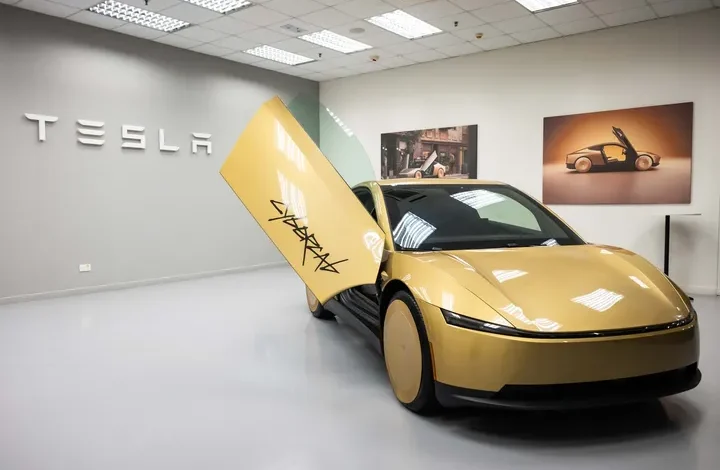
Tesla has been taking its Cybercab robotaxi to international markets as it promotes the vehicle’s autonomous-driving technology. The two-seat electric vehicle, which has no steering wheel or brake pedals, was displayed in Beijing and Shanghai in September as part of a public showcase of its design and technology. Tesla clarified that the Chinese displays were demonstrations only and did not represent plans to sell the Cybercab in China or launch commercial driverless ride-hailing services there.
The Cybercab is one of the most ambitious vehicles in Tesla’s autonomous-driving strategy. The vehicle is designed specifically for robotaxi operations, with a minimalist two-seat cabin and a large central screen. Tesla began offering limited Cybercab rides in Austin, Texas, in September, with more than 40 purpose-built vehicles initially deployed through its Robotaxi service. The vehicles operate without a conventional steering wheel or pedals, representing a major departure from Tesla’s existing passenger cars.
Tesla’s international displays are also an opportunity to introduce the Cybercab to markets where autonomous transportation is developing rapidly. China already has companies operating robotaxi services, making the country an important market for Tesla’s long-term autonomous-driving ambitions. However, regulatory requirements remain a major obstacle. The Chinese showcases were therefore carefully positioned as technology demonstrations rather than commercial launches, allowing Tesla to promote the vehicle without suggesting that driverless operations were immediately coming to Chinese roads.
At the same time, Tesla is continuing to expand its Cybercab operations in the United States. Recent reports indicate that large numbers of Cybercabs have been spotted in Houston and other Texas locations, suggesting that Tesla may be preparing to expand its autonomous ride-hailing operations beyond Austin. Tesla’s current Robotaxi service is already operating in several U.S. markets, although Cybercab deployment remains more limited.
The Cybercab rollout remains closely watched because Tesla must demonstrate that its camera-based autonomous-driving system can operate safely in a wide range of conditions. Recent reports have highlighted challenges involving low-light conditions and the detection of objects such as animals at night. Regulators are also examining aspects of Tesla’s Cybercab deployment. If Tesla can overcome the technical and regulatory challenges, the vehicle could become an important part of the company’s plan to build a large autonomous ride-hailing network.