
Block Unveils Dessa, a Human-Like AI Voice Model That Can Run on Laptops
Jack Dorsey’s financial technology company Block has introduced Dessa, an experimental AI voice model trained entirely on human speech that can listen and speak simultaneously, reproduce emotional nuances and potentially operate locally on consumer computers.

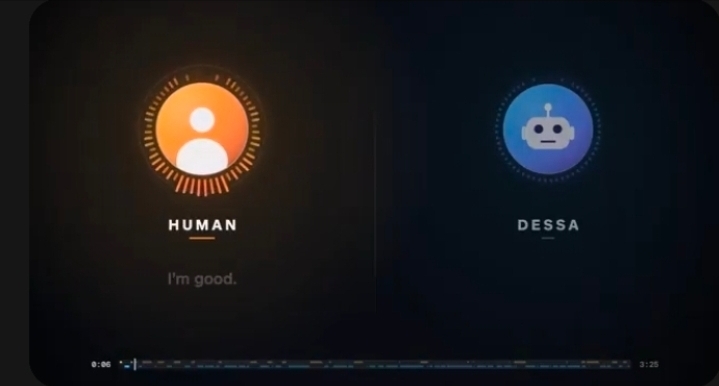
Block, the financial technology company behind Square and Cash App, has unveiled a new artificial intelligence model called Dessa, designed to make conversations between humans and AI sound more natural. Announced on October 23, 2026, the model is being developed by Block’s internal AI research team under the leadership of Ragavan Thurairatnam. Unlike many existing voice assistants, which convert spoken words into text before generating a response, Dessa is designed to process audio directly and produce spoken responses without relying on an intermediate text transcript. The company says this approach allows the model to preserve conversational details such as pauses, laughter, interruptions and changes in emotional tone. Block co-founder and CEO Jack Dorsey described the project as an important step towards making voice the most natural way for people to interact with artificial intelligence.
One of Dessa’s most distinctive features is its full-duplex speech capability, which allows it to listen and speak at the same time. Traditional voice assistants often wait for a person to finish speaking before responding, creating a noticeable delay that can make conversations feel mechanical. Dessa is designed to handle interruptions, respond to changes in conversational rhythm and produce small acknowledgements while another person is talking. Block has also demonstrated the model using different emotional tones, including excitement, laughter and sadness. The company argues that these characteristics could make AI conversations feel more natural and improve communication between people and intelligent systems. However, demonstrations have also revealed occasional awkward responses, including an instance in which the model mistakenly identified a speaker as someone named Ronaldo, illustrating that realistic speech does not necessarily guarantee consistent understanding.
Block says Dessa was trained from scratch using human conversations, without text-based training data or a pretrained language model. The approach is intended to investigate whether an AI system can learn aspects of language, reasoning and conversational behaviour directly from audio. According to the research team, speech contains information that written text often loses, including vocal emphasis, timing, emotion and the way people respond to one another. The company believes that learning directly from these signals could help AI systems recognise when someone is distressed, confused or in pain. Block has also described the model as relatively compact compared with many large AI systems, claiming that it can run locally on a MacBook Pro equipped with an M4 Max chip or better. This could eventually make advanced voice interactions possible without requiring every conversation to be processed by remote cloud servers.
The potential applications for Dessa extend beyond personal assistants. A speech model that can respond naturally and operate with low latency could be useful for customer-service systems, interactive gaming characters, accessibility tools and voice-controlled software. Block already operates businesses that use technology to support payments and small-business services, giving it potential opportunities to explore voice-based interactions within its existing products. Local processing could also reduce dependence on cloud infrastructure and provide additional privacy benefits, depending on how the model is eventually implemented. Nevertheless, important technical details remain undisclosed. Block has not yet published a comprehensive technical paper, independent benchmark results, model weights, API documentation or public pricing. As a result, its claims about conversational quality, training efficiency and performance on consumer hardware have not yet been independently verified at scale.
Safety is another major consideration because a voice model capable of sounding convincingly human could be misused for impersonation, fraudulent calls or social engineering. A system that reproduces natural pauses and emotional reactions may be particularly persuasive to people who cannot easily distinguish synthetic speech from a real person’s voice. Block says it intends to give a small group of AI safety researchers early access so they can examine potential risks and identify problems before a broader release. This limited approach could help researchers evaluate how the model responds to sensitive conversations and whether its human-like characteristics create additional security concerns. However, the effectiveness of these safeguards will depend on the results of independent testing and the protections implemented before public deployment.
The launch of Dessa represents a new direction in the competition to develop more natural AI interfaces. While many technology companies have focused on improving language models, coding assistants and autonomous agents, Block is investigating whether speech itself can serve as the foundation for a more expressive form of artificial intelligence. If the company’s claims are validated, Dessa could contribute to the development of voice assistants that communicate with less delay and better recognise the emotional context of conversations. For now, however, the model remains an experimental project rather than a widely available product. Its long-term significance will depend on whether independent researchers can reproduce its reported performance, whether it proves reliable outside selected demonstrations and whether Block can address the risks associated with increasingly realistic synthetic voices.




