
Micron Suspends $4.5 Billion Taiwan Chip Factory Project Amid Labour Dispute
The American semiconductor giant has reportedly halted construction of a major memory-chip facility in Taiwan as disagreements over employee compensation and profit-sharing threaten its expansion plans.

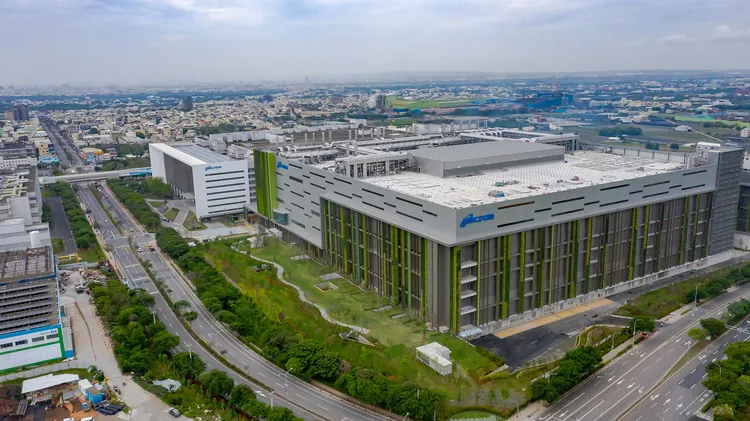
Micron Technology has reportedly suspended construction of its planned $4.5 billion memory-chip manufacturing facility in Taoyuan, Taiwan, following an escalating labour dispute with local employees. According to a Bloomberg report published on November 5, the company has largely halted work on the project, known as Fab 11E, after growing uncertainty surrounding negotiations with workers’ unions. The facility was originally expected to begin operations in 2028.
The disagreement centres on demands from employees for better compensation and a larger share of the company’s profits generated by the global artificial intelligence boom. The Taoyuan workers’ union is reportedly seeking a system that would distribute 15 per cent of Micron’s operating profits among employees worldwide. Workers are also demanding cash incentives rather than payments partially tied to company shares. Although Micron reached an agreement with a larger union in October, some employees are challenging the arrangement.
The proposed facility was expected to manufacture high-bandwidth memory (HBM) and dynamic random-access memory (DRAM), two essential components used in advanced AI systems, computers and other electronic devices. Micron had allocated between $3 billion and $4.5 billion for the project, including purchases of advanced manufacturing equipment from ASML. Taiwan currently accounts for approximately 60 per cent of Micron’s global DRAM production, making the island a critical part of its semiconductor operations.
The suspension could complicate Micron’s efforts to expand production at a time when global demand for AI memory chips continues to rise. The company employs approximately 15,000 people in Taiwan and has invested nearly $50 billion in the region over three decades. Micron stated that its existing Taiwanese operations remain normal and that it is confident in maintaining business continuity for customers. However, prolonged negotiations could delay its expansion plans and create opportunities for competitors such as Samsung Electronics and SK.




